SAI and Safdarjung Centre Partner for Sports Science
India's Sports Authority of India (SAI) and the Safdarjung Sports Injury Centre have signed a Memorandum of Understanding aimed at strengthening sports science infrastructure and athlete care across the country.
Duncan Reed·updated July 11, 2026
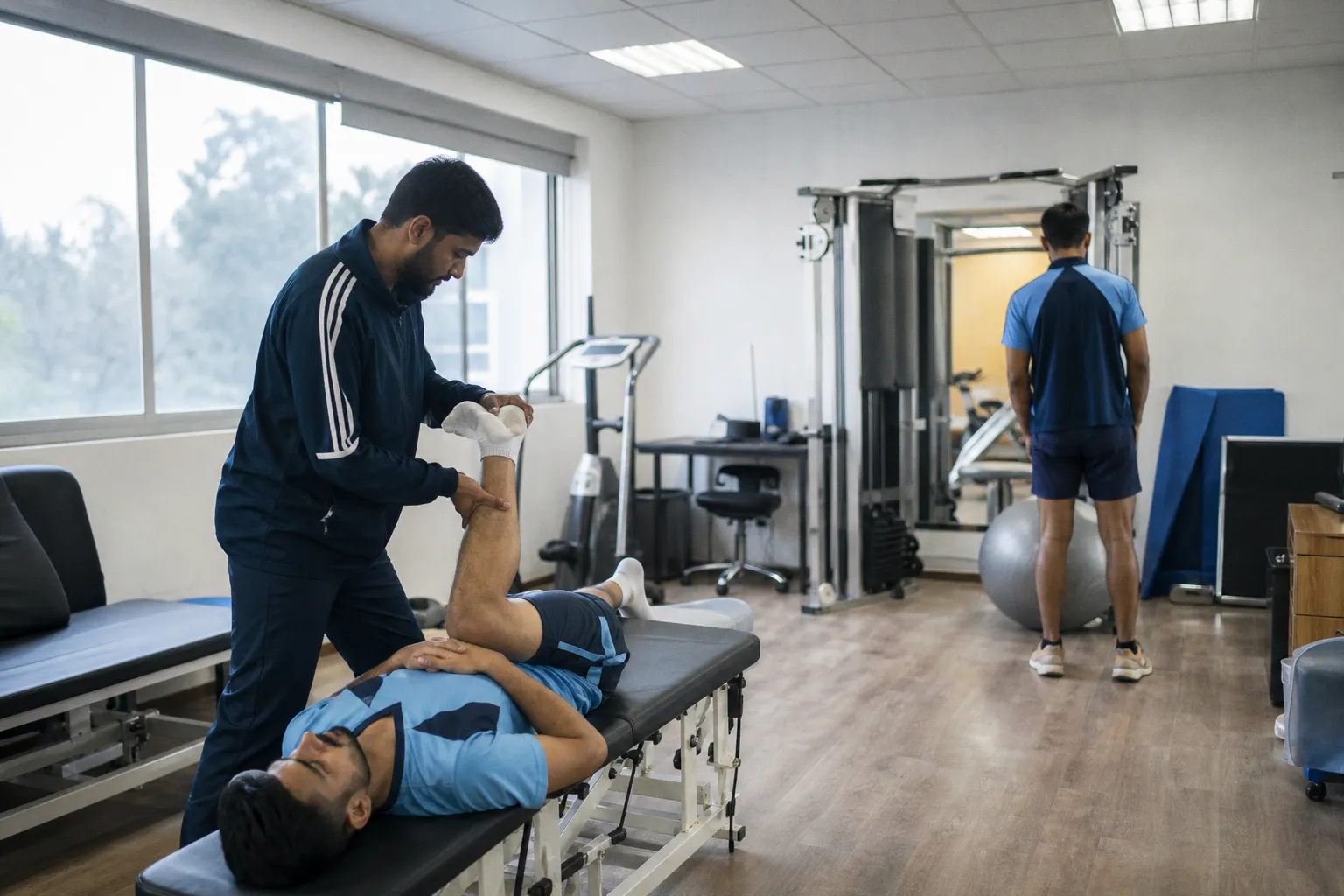
What the Agreement Targets
Details beyond the MoU's stated scope remain limited in available reporting. The core stated objective is twofold: enhance sports science capabilities and improve athlete care. In institutional contexts, "sports science" typically covers biomechanical analysis, physiological testing, load monitoring, and recovery protocol design. "Athlete care" points toward injury prevention screening, acute injury management, and return-to-play pathways.
Safdarjung Sports Injury Centre operates as a specialized clinical facility. SAI governs national sports development. The pairing suggests a closed-loop model: training load data flows to clinical staff; injury incidence data flows back to conditioning programs. This feedback structure is the foundation of evidence-based periodization. Without it, training plans operate on guesswork.
Why It Matters Beyond Elite Circles
India's formal sports science ecosystem has historically operated in silos. National training centers and sports medicine hospitals have functioned as separate entities with limited data sharing. An MoU formalizes communication channels. It does not guarantee execution, but it establishes a framework for joint research, shared protocols, and coordinated athlete management.
For the everyday athlete training independently, the downstream effect is this: institutional collaborations produce published research, standardized screening tools, and refined rehabilitation protocols. These eventually reach sports physiotherapists, strength coaches, and training apps used by recreational populations. A biomechanical assessment methodology validated on elite athletes under controlled conditions carries more diagnostic weight than anecdotal gym-floor assessments.
What to Monitor
Track whether this MoU produces measurable outputs: joint research publications, standardized injury surveillance databases, or publicly available screening protocols. Institutional agreements without follow-through are common. The signal worth watching is whether SAI and Safdarjung begin publishing shared data on injury patterns tied to specific training loads, sport categories, or competition phases.
For your own training, the actionable takeaway is narrow but concrete: if you are accessing sports medicine services in India, ask whether your physiotherapist or conditioning specialist draws on current institutional research or relies on generalized templates. The gap between the two determines the precision of your load management and return-to-play decisions.