Branded Sport Science Centers
I'll spend $200 on a "personalized recovery protocol" the same day a stranger tells me I have unique micronutrient needs spotted by a proprietary scan.
Nelson Gould·updated July 10, 2026
What Taiwan is actually funding
Go Healthy with Taiwan 2026 runs through Taiwan's International Trade Administration and TAITRA, open to researchers, startups, and institutions worldwide. The top 20 finalists get expert mentoring on business model, market validation, and commercialization; six finalists get a sponsored trip to Taiwan; three winners take home $30,000 each. Registration closes August 5, 2026.
The first edition pulled in 638 proposals from 55 countries, and organizers point to a U.S.–Taiwan collaboration as a flagship outcome: Ideas Lab is working with the Taiwan Institute of Sports Science (TISS) on AI-driven motion analysis. That, in theory, is exactly the kind of tool that could put a technique assessment into the hands of anyone with a phone and a wall. In practice, we won't know if it's actually useful until independent coaches and labs have stress-tested it.
What "branded" usually buys you
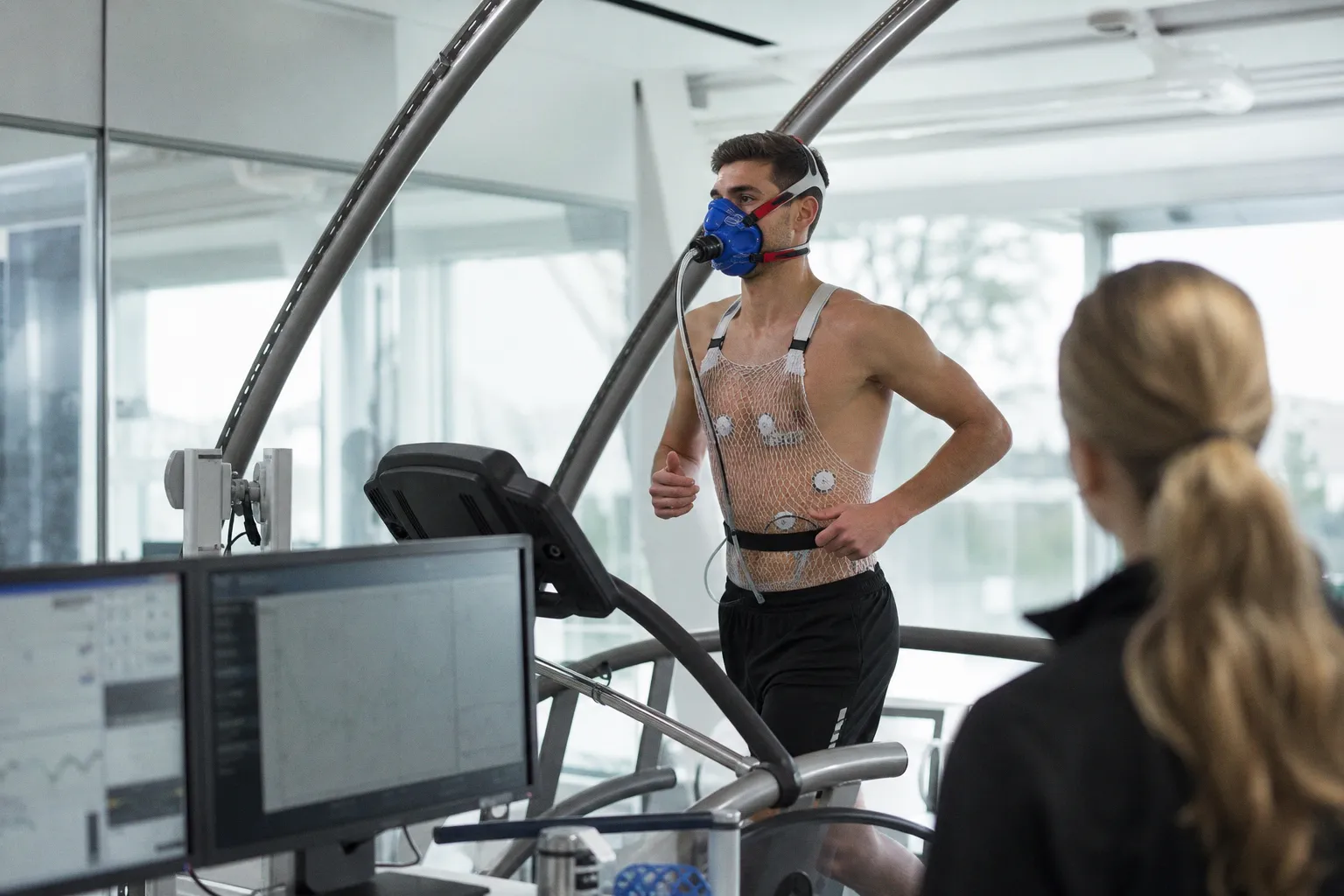
This is the part I want you to sit with. A branded sport science center almost always means a corporate identity — shoe brand, supplement line, tech platform, or private lab — bolted onto testing and protocols that already exist in any university kinesiology department. The Trend Hunter item is thin on specifics, but the pattern is familiar. You walk in. You get a battery: VO2max, lactate threshold, body comp, maybe a force-plate read, maybe a proprietary recovery "score." You walk out with a glossy report and the feeling that you've been measured to a professional standard.
The physiology doesn't care about the logo. A lactate threshold test on a club runner's treadmill returns the same number regardless of who's watching. Sometimes the value is real — a competent sport scientist reading your data and telling you what to actually change is worth paying for, paint job irrelevant. Often, though, what you're buying is the ambience, the upsell, and a subscription to a recovery plan you could've written yourself from any decent training textbook.
Three questions before you book
Run any sport science assessment past these and most of the marketing evaporates:
- Is the metric independently validated, or is it a proprietary "score" the brand invented? Lactate threshold, VO2max, and basic force-plate output are. Composite recovery scores usually aren't.
- Do you leave with one specific training adjustment and a re-test date, or do you leave with a recommendation to book a follow-up package?
- Is the facility measuring your baseline — the number you actually need to track change over time — or running a bundle of tests designed to look comprehensive in a PDF?
The Taiwan-backed push will likely produce a few genuinely useful tools for amateur athletes over the next couple of years. It'll also produce a much larger pile of branded services that look like science on the receipt. The split isn't subtle, and making it is on you.