Gym Belts Market Dynamics: Strengthening the Future of Performance Training
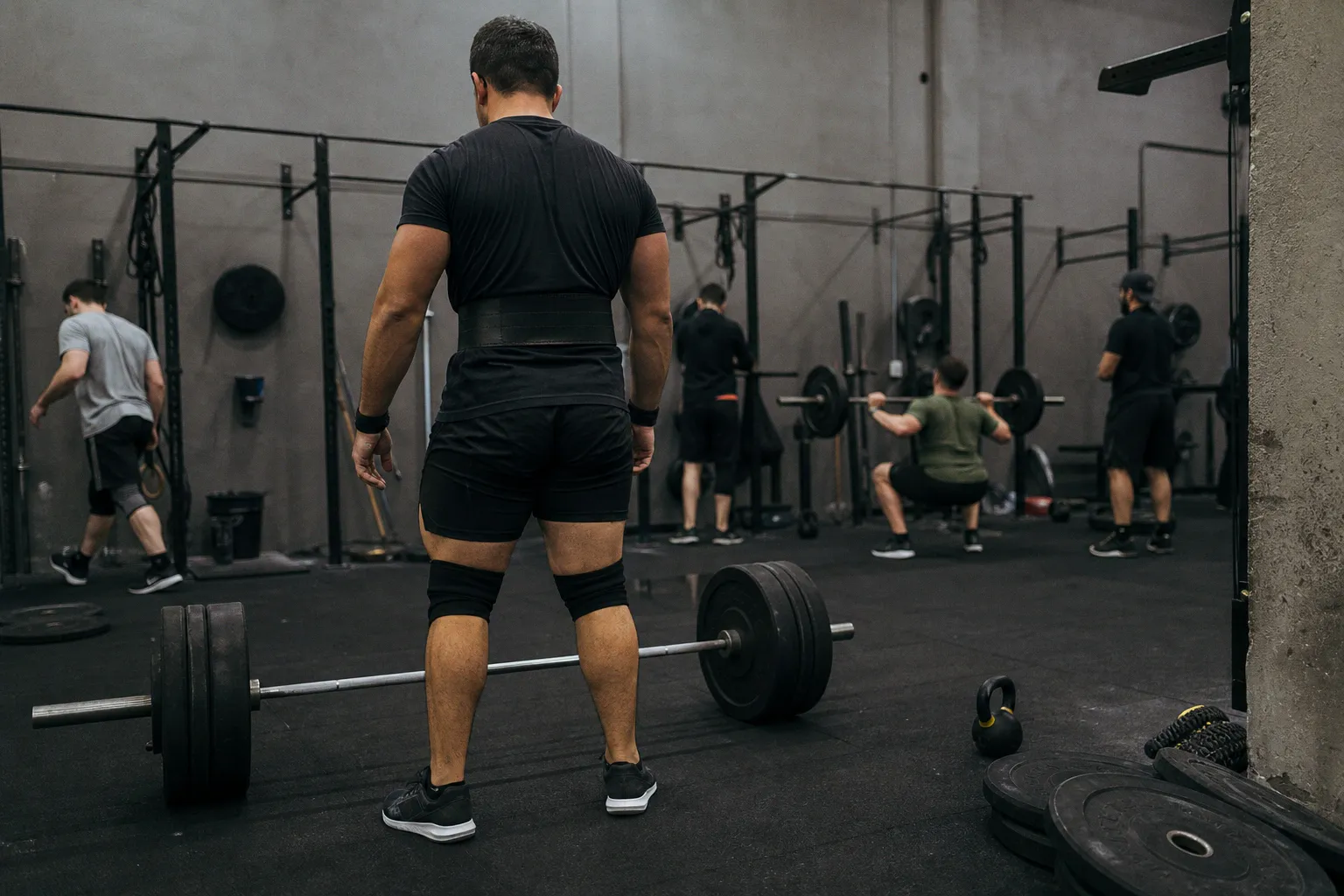
A lifting belt changes bracing mechanics. It does not create force production by itself.
Duncan Reed·updated July 10, 2026
The market signal is really a training-behavior signal
The openPR item frames gym belts as part of the future of performance training. The source material available is limited to the headline-level summary, so the precise market claims should be treated cautiously. Still, the signal is clear enough: belts remain a commercial focus because strength training keeps moving beyond specialist powerlifting rooms.
That matters for amateur athletes because equipment often enters a program before the movement standard is stable. A belt is easy to buy. A repeatable brace under load is harder to build. The difference is mechanical.
A belt gives the trunk a surface to brace against. It can support higher perceived stiffness during heavy compound lifts. But it cannot fix a weak hinge pattern, a collapsing rib cage position, or a squat that shifts load away from the intended tissues. If the athlete uses the belt to bypass those errors, the tool becomes a compensation strategy.
The same logic applies to the broader consumer pull toward efficient strength training. MSN’s recent push-up training item and Yahoo Creators’ “2 hours a week” strength-training angle both sit in that lane: minimal kit, compressed schedules, visible outcomes. The belt market is the loaded end of the same continuum.
Belts fit heavy loading, not every set
The belt decision should start with the lift, not the product category. High-load squats, deadlifts, and similar patterns place large demands on trunk stiffness. In those conditions, a belt can be a load-management tool. It changes the bracing task. It does not remove it.
For lower-load accessory work, general conditioning, push-up variations, and most technical practice, the belt usually adds noise. The athlete should be able to control pelvis, ribs, and breathing without a rigid external cue. If that control disappears as soon as the belt comes off, the training system has a dependency problem.
This is the common error in recreational programming: equipment gets treated as progression. It is not. Progression is better force production, cleaner kinematics, higher tolerance to planned load, or more repeatable execution under fatigue. A belt may help express strength in a specific context. It should not define the athlete’s baseline.
The practical screen is simple. Can the athlete perform the movement with stable trunk position and consistent bar path or body path without the belt? If no, reduce the load or simplify the variation. If yes, the belt can be introduced for the sets where the training goal is heavy force output rather than motor learning.
What to watch before buying into the category
The useful development to track is not branding. It is whether belt use is being discussed with clearer training context. “Performance training” is too broad to guide a session. The relevant variables are lift selection, loading, experience level, fatigue state, and whether the athlete can brace without external support.
For athletes with limited training time, the Yahoo Creators framing around 2 hours a week points to a constraint that is more important than gear choice. Short sessions require clean priorities. Compound lifts, bodyweight pressing such as push-ups, and basic strength progressions will usually demand more planning than accessories. A belt can support a narrow slice of that work. It cannot organize the week.
Use this protocol. Train the lift beltless while technique is being built. Add the belt only to heavier working sets where trunk stiffness is the limiting variable, not basic coordination. Keep warm-ups and lighter sets beltless so the brace remains self-generated. If the belt changes the movement pattern rather than stabilizing it, remove it and fix the pattern first.