Is a Whoop Subscription Worth It Compared to Garmin?
You've been tracking your training for a while now — maybe logging runs on your phone, maybe wearing a basic fitness band to get a rough sense of your daily movement. And at some point, the question surfaces: should I invest in a serious wearable?
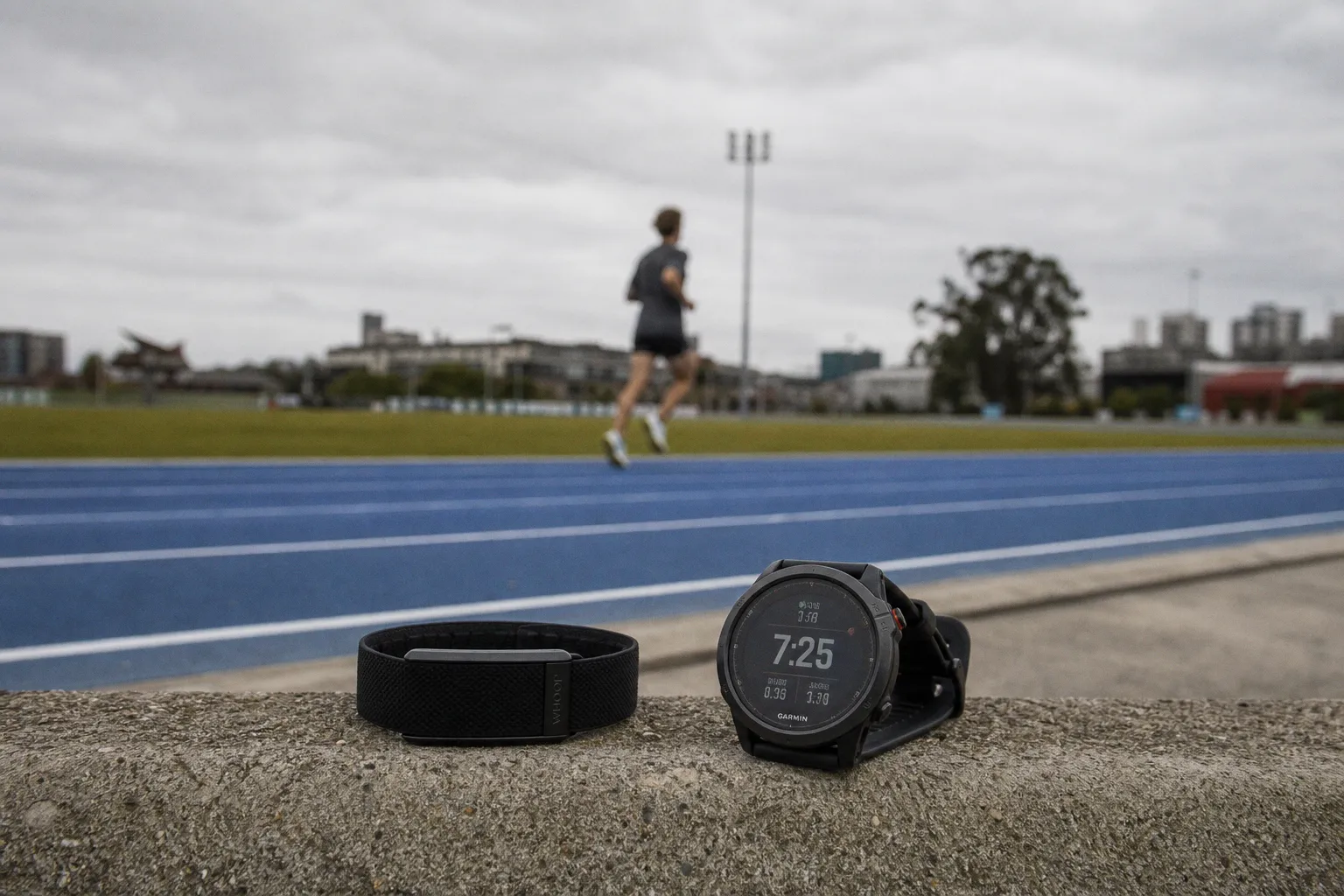
Is a Whoop Subscription Worth It Compared to Garmin?
That distinction matters more than most people realize at the point of purchase. We tend to fixate on the sticker price of a device and forget to model what we'll actually spend over two, three, or five years of use. For the amateur athlete who trains consistently but isn't sponsored by anyone, the financial architecture of your fitness tracker is a decision that compounds. So let's sit with this question properly: is a Whoop subscription worth it compared to Garmin, and what are you really paying for in each case?
The Subscription Trap: Analyzing Whoop's Recurring Cost Model
Whoop's business model is unusual in the wearable space, and it's worth understanding precisely how it works before you hand over your credit card. The device itself — a small, screenless band that wraps around your wrist or bicep — is technically bundled into the subscription cost. There is no way to purchase the hardware separately and use it independently. You are buying access to the Whoop ecosystem, and the band is simply the sensor that feeds it.
For related context, see June's 12 Best Pieces of Gear.
Current pricing runs approximately $239 to $399 per year depending on the commitment length you choose. The monthly plan sits at the higher end; an 18-month commitment brings the per-year cost down. But here is the part that often catches people off guard: if you cancel your subscription, the band becomes inert. It does not track, it does not store, it does not display anything. You are left with a piece of silicone and a dead sensor. Your historical data lives in the Whoop app, but without an active subscription, your access to meaningful analytics is effectively severed.
This isn't inherently predatory — it's a business choice, and Whoop delivers genuine value within that model. Their algorithms for Strain and Recovery scores, built around continuous heart rate variability monitoring, are sophisticated and genuinely useful for athletes who want to understand the physiological cost of their training load. The interface is clean, the insights are digestible, and the 24/7 wearability without a screen means there's no temptation to check notifications mid-workout.
But the financial math deserves a clear-eyed look. Over a three-year period, even at the lower annual rate, you're approaching $700 or more. Over five years, you've crossed the $1,000 threshold. And at the end of that period, if you stop paying, you own nothing functional.
A subscription model isn't a trap if you understand exactly what you're renting — but it is a commitment that changes the long-term economics of how you relate to your own training data.
Hardware Independence: Why Garmin's One-Time Purchase Remains the Industry Standard
Garmin operates on a fundamentally different philosophy. You buy a watch — a Forerunner 265 for around $350, a Fenix 7 for $600 or more, a Venu 3 for roughly $450 — and that hardware is yours. The Garmin Connect app, which stores and analyzes all your data, is free. There is no mandatory monthly fee to view your heart rate trends, your training load, your sleep metrics, or your VO2 max estimates.
This doesn't mean Garmin's ecosystem is entirely without cost. Some advanced features, like certain map updates or structured training plans through Garmin Coach, may carry additional considerations. Third-party app integrations sometimes have their own pricing. But the core data — the stuff that actually matters for a recreational athlete monitoring their health and performance — remains accessible without an ongoing financial obligation.
The hardware itself is remarkably capable. Depending on the model you choose, you get built-in GPS for accurate pace and distance tracking, multi-sport modes for switching between running and cycling and swimming, optical heart rate monitoring at the wrist, and a display that shows real-time metrics during your workout. Battery life ranges from roughly seven days on a feature-heavy model with regular GPS use to over 30 days on some of the more endurance-focused watches in the Fenix or Enduro lines.
From a purely financial standpoint, the comparison over time is stark. Let's map it out:
| Time Horizon | Whoop (at ~$300/year) | Garmin (Forerunner 265, ~$350 one-time) |
|---|---|---|
| Year 1 | $300 | $350 |
| Year 2 | $600 total | $350 total |
| Year 3 | $900 total | $350 total |
| Year 5 | $1,500 total | $350 total |
Even if you upgrade your Garmin every three years — which many athletes do as technology improves — you're still spending less over a five-year window than a continuous Whoop subscription. The economics only favor Whoop if you use it for less than about 14 months and then walk away entirely, which rather defeats the purpose of longitudinal health tracking.
Screen-Free Recovery vs. Real-Time Performance Metrics
This is where the decision gets more nuanced, because the two devices are optimized for different moments in your training life.
Whoop's strength is in what happens between workouts. Its Recovery score, derived primarily from your heart rate variability, resting heart rate, and sleep performance, gives you a daily percentage that tells you how ready your nervous system is to absorb training stress. The Strain score quantifies the cardiovascular cost of your day. For athletes who tend to overtrain — who push through fatigue because they feel like they "should" be working out — this kind of feedback loop can be genuinely transformative. It helps you practice listening to the joint, listening to the tissue, before a minor imbalance becomes a more significant problem.
Garmin, on the other hand, shines during the workout itself. Looking down at your wrist and seeing your current pace, your heart rate zone, your cadence, your elapsed time — that real-time feedback is what helps you execute a tempo run properly or maintain your effort on a long climb. Garmin's Body Battery metric attempts to serve a similar recovery-tracking function to Whoop's Recovery score, drawing on HRV and activity data to estimate your energy reserves. It's not identical in methodology, but for most amateur athletes, it provides functionally similar guidance.
The question, then, is about your training personality. If you're the kind of athlete who already knows how to structure a workout but struggles with knowing when to pull back — if your movement literacy is solid but your self-regulation needs support — Whoop's recovery-centric design speaks directly to that gap. If you want a device that accompanies you through the workout with actionable, glanceable data and also handles GPS, navigation, and multi-sport tracking, Garmin is built for that purpose.
The best wearable is the one that addresses your actual training blind spot — not the one with the most features on paper.
Battery Longevity and Daily Wearability for the Amateur Athlete
There's a practical dimension here that often gets lost in feature comparisons, and it has everything to do with compliance. The most sophisticated biometric sensor in the world is worthless if it's sitting on your nightstand charging when you need it.
Whoop claims up to five days of battery life, and in practice, many users report three to four days depending on usage patterns. The charging mechanism is clever — a small battery pack slides onto the band while you're still wearing it, so you never have to take it off. This is a genuine design advantage for continuous wearability, and it supports the 24/7 data collection that makes Whoop's recovery algorithms meaningful.
Garmin's battery performance varies dramatically by model and usage. A Forerunner 265 in smartwatch mode will last roughly a week; switch to continuous GPS tracking and that drops significantly. A Fenix 7 in battery-saver mode can stretch to over a month. Charging requires removing the watch and connecting it to a proprietary cable for an hour or so, which means gaps in your data if you're not disciplined about the timing.
For the amateur athlete who trains four or five times a week and wears their device around the clock, both options are manageable — but they demand different habits. Whoop's always-on design removes the decision of when to wear it; you simply never take it off. Garmin requires you to build charging into your routine, ideally during a low-activity window like showering or desk work. It's a minor friction, but friction compounds over time.
The absence of a screen on Whoop is both its philosophical statement and its practical limitation. You cannot glance at the time, check your pace during a run, or see a notification without pulling out your phone. For some athletes, this enforced disconnection is a feature — it keeps the focus on the workout, not the data. For others, particularly those doing structured interval sessions or navigating unfamiliar routes, the lack of a display is a genuine functional gap.
Calculating Your True ROI Based on Training Goals
Let's bring this into the territory that actually matters: your specific situation as an amateur athlete. The return on investment from any wearable isn't measured in the device's specifications — it's measured in the quality of decisions you make because of the data it provides.
If your primary goal is building sustainable training habits over years — training consistently, avoiding the boom-and-bust cycle of overtraining and forced rest — the long-term cost structure matters enormously. A Garmin watch purchased once and used for three to five years, providing you with daily readiness estimates, workout tracking, and sleep data, represents a remarkably efficient investment. The cost per insight trends downward the longer you use it.
If your training is highly structured and you're specifically working on autoregulation — learning to match your training intensity to your body's daily readiness, developing better tissue tolerance by respecting recovery signals — Whoop's model delivers targeted value. The question is whether that value justifies the perpetual cost, and the honest answer depends on how much you need the specific algorithmic interpretation that Whoop provides versus the raw data that Garmin offers.
Here's a framework for thinking through the decision:
1. Map your training frequency and goals. If you train fewer than four times per week and your goals are general fitness, Garmin's versatility and one-time cost make it the practical choice. If you train daily or twice-daily and manage high training loads, Whoop's recovery focus becomes more relevant.
2. Identify your blind spot. Athletes who chronically under-recover benefit from Whoop's relentless emphasis on readiness. Athletes who need better in-workout pacing, navigation, or multi-sport flexibility benefit from Garmin's real-time display and GPS.
3. Model the three-year cost. Don't just look at month one. Write down the total outlay over 36 months for each option, including any accessories or subscription tiers. The numbers are often surprising.
4. Consider your relationship with data ownership. If the idea of losing access to your historical trends because you paused a subscription feels unacceptable, Garmin's model will sit better with your psychology. Data sovereignty matters for long-term health tracking.
5. Factor in ecosystem compatibility. Garmin's data integrates with a wide range of third-party platforms — Strava, TrainingPeaks, and others — without additional cost. Whoop's data is more siloed, which may or may not matter depending on your existing workflow.
There's no universal right answer here, and anyone who tells you otherwise is probably selling something. What there is, however, is a clear framework for matching your money to your actual training needs. The amateur athlete who takes the time to think through these questions — rather than defaulting to whichever device their training partner happens to wear — will end up with a tool that genuinely serves their practice.
Over time, the best investment in your athletic life isn't the device with the most impressive sensor array. It's the one that teaches you something about your body that you didn't know before, and keeps teaching you for years without asking you to renegotiate the relationship every billing cycle. For more on navigating everyday decisions with a practical mindset, resources like Bycepni offer grounded perspectives on lifestyle and culture that complement the training-focused lens we bring here.
Your body is the long-term project. The wearable is just one of the tools in the workshop. Choose the tool that matches the work you're actually doing — not the work you imagine you might do someday — and you'll find the investment pays for itself in ways that have nothing to do with the price tag.