Sports Insole Market Trends: Growth Forecasts and Tech
The global sports and athletic insole market is projected to nearly double, moving from USD 4.3 billion in 2026 to USD 8.4 billion by 2036 at a compound annual growth rate of 7.0%.
Duncan Reed·updated July 08, 2026
Where the market is going mechanically
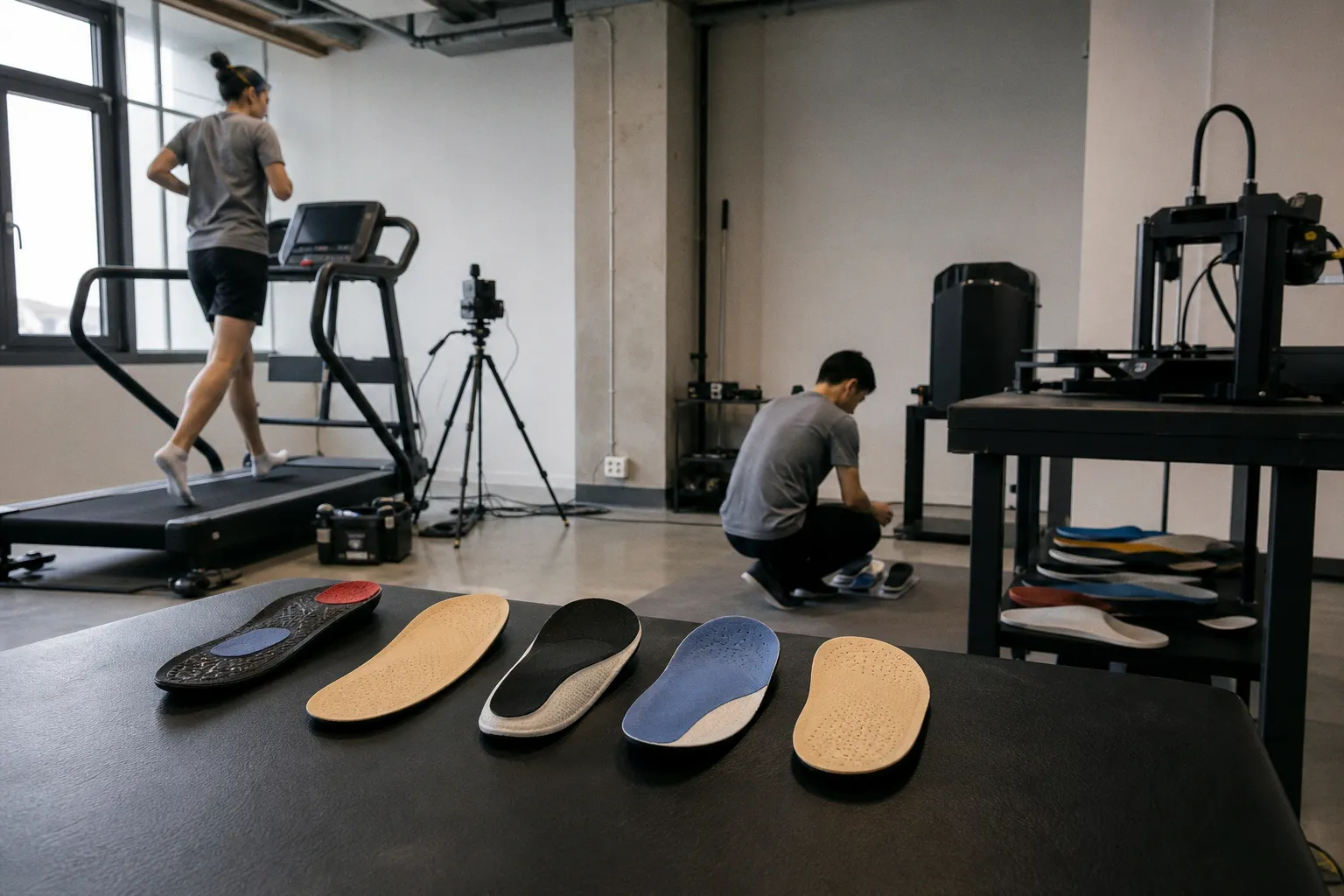
Foam inserts defined the segment for decades. The current generation targets specific kinematic variables: shock absorption at initial ground contact, medial-lateral arch stability through midstance, and energy return at toe-off. Materials in active commercial use include memory foam for compressive dampening, gel cushioning for pressure distribution under the metatarsal heads, carbon fibre plates for bending stiffness and propulsion, and breathable uppers for thermoregulation during extended activity. Manufacturers are also incorporating recycled materials and more sustainable production methods, per the FMI report.
The deeper change is fit and data. AI-powered 3D foot scanning captures arch height and plantar pressure distribution, feeding those values directly into custom orthotic production. Smart insoles with embedded sensors add continuous gait analysis and performance monitoring, integrating with standard wearable ecosystems. The end state: a measurement layer that previously required a biomechanics laboratory now operates inside an ordinary running shoe.
What this means for training
For recreational runners, the practical implications are direct. Gait analysis and performance monitoring, flagged in the FMI report as core features of the new generation, can be recorded per session rather than once in a clinical assessment. Load management decisions—weekly volume, recovery day placement, surface selection—gain an additional data input. Programming feedback loops compress.
The technology applies to high-volume, low-intensity activity as well. Extended walking on uneven surfaces, including the cobblestone and irregular grade documented in heritage old town walking guides, produces sustained cumulative strain across the plantar fascia and posterior tibial chain. Structured arch support and forefoot padding absorb that load. Insole choice becomes part of the activity's mechanical budget rather than a comfort afterthought.
Material and geometry should match the dominant mechanical demand. Carbon-plate construction suits runners seeking forefoot stiffness and lever-arm extension; it does not align cleanly with lifters who require stable, flat-foot contact in the squat. Generic product labels obscure the actual variable each material is modulating.
What to watch
Three near-term developments will determine value. First, the cost trajectory of custom orthotics as digital scanning scales. Mass-market pricing could shift insole selection from optional to standard. Second, sensor durability. Insole-collected data drifts as materials compress, raising calibration questions for long-term users. Third, app integration. Kinetic value depends on whether the data enters a feedback loop the athlete actually reviews.
The market also retains friction. Counterfeit and low-quality alternatives remain prevalent, per the report. Material and structural data, not branding, should drive purchase. A neutral gait does not require the same corrective geometry as overpronation or forefoot collapse. Market expansion widens the choice set; it does not replace individual mechanical assessment.