6 Overlooked Pieces of Gym Equipment That Build Functional Fitness
A recent AOL.com feature flagged six pieces of standard gym equipment most lifters walk past without using.
Duncan Reed·updated July 07, 2026
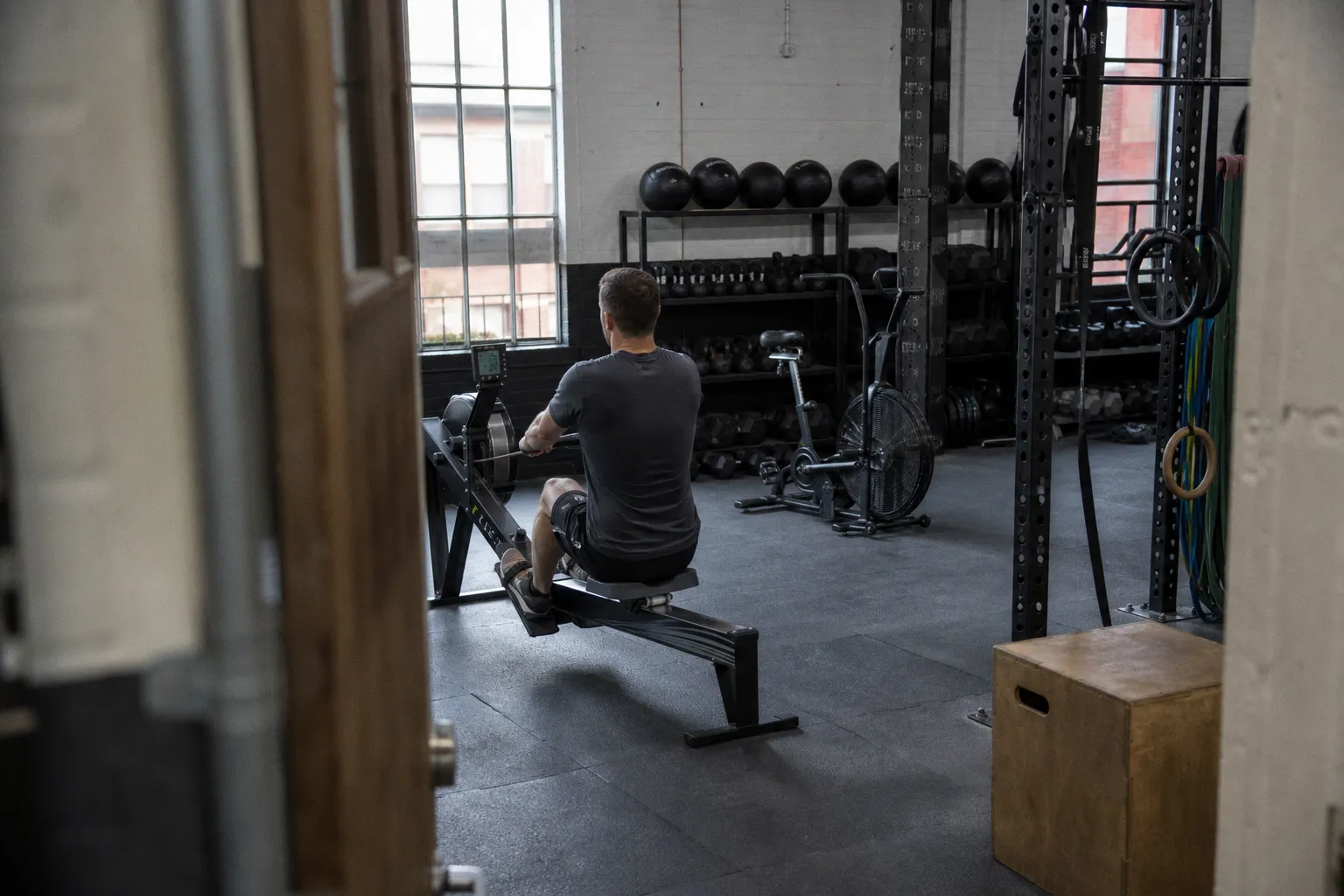
The Case for Afferent Load
Bertram's central claim is mechanical: muscular output is not the only output that matters. Equipment that perturbs balance, proprioception, and multi-directional load exposes deficits in stabilization that bilateral barbell work hides. An unstable surface recruits smaller stabilizers earlier in the movement chain. That changes joint angles, alters kinematics, and raises the demand on the nervous system before prime movers ever reach peak tension.
For the everyday athlete, the practical implication is straightforward. A training log built around heavy squats and deadlifts, with no exposure to reactive instability, leaves deceleration and force redirection underdeveloped. That gap is where soft-tissue injuries tend to enter.
Tools and the Force They Demand
The AOL piece highlights several underused implements. The BOSU ball — "both sides up" — provides an unstable platform usable beneath squats, split squats, or upper-body pressing. Bertram cites it for reflexive core stability: the nervous system adapts continuously to micro-corrections, a skill that carries over to running gait and uneven footing.
Medicine balls sit at the other end of the force curve. Rotational throws, overhead slams, and squat-to-press patterns force the body to generate, absorb, and transfer force through the trunk. These movements couple the upper and lower body through the core — closer to athletic demand than isolated curls or machine presses.
A heavy bag is not reserved for boxers. Striking integrates the kinetic chain from foot to fist. Ground reaction force enters the legs, travels through trunk rotation, and exits the hands. The training effect: power endurance, rotational control, and grip under fatigue. The chinup bar remains the simplest closed-chain upper-body loading device in most facilities — and one Bertram still ranks among the best functional tools available.
What to Track
Before adding instability work, audit current training exposure. Most recreational athletes spend the majority of weekly volume on stable bilateral lifts. Rebalancing toward single-leg, rotational, and unstable-surface work closes the kinematic gap between the gym floor and real-world terrain.
Three protocol steps:
1. Replace one weekly accessory slot with a BOSU- or single-leg variation. Keep load moderate.
2. Add one medicine ball movement per session — rotational throw or slam — at controlled tempo.
3. Use the chinup bar twice weekly. If bodyweight is too easy, add slow eccentrics.
Progress is measurable in three metrics: time under tension on unstable surfaces, peak rotational ball velocity, and rate of perceived instability during standardized balance holds. If those numbers do not move over time, the dose is too low or too random to produce adaptation.
Equipment does not train the body. The nervous system does. The tools named in the AOL feature simply give it a reason to adapt.