Beyond Raw Strength Gains - Integrated Athletic Training
Strength training is being repositioned. It is no longer treated as a standalone performance metric. Industry reporting describes a consumer shift where strength is now one component of a larger system that includes mobility, recovery, and longevity goals.
Duncan Reed·updated July 07, 2026
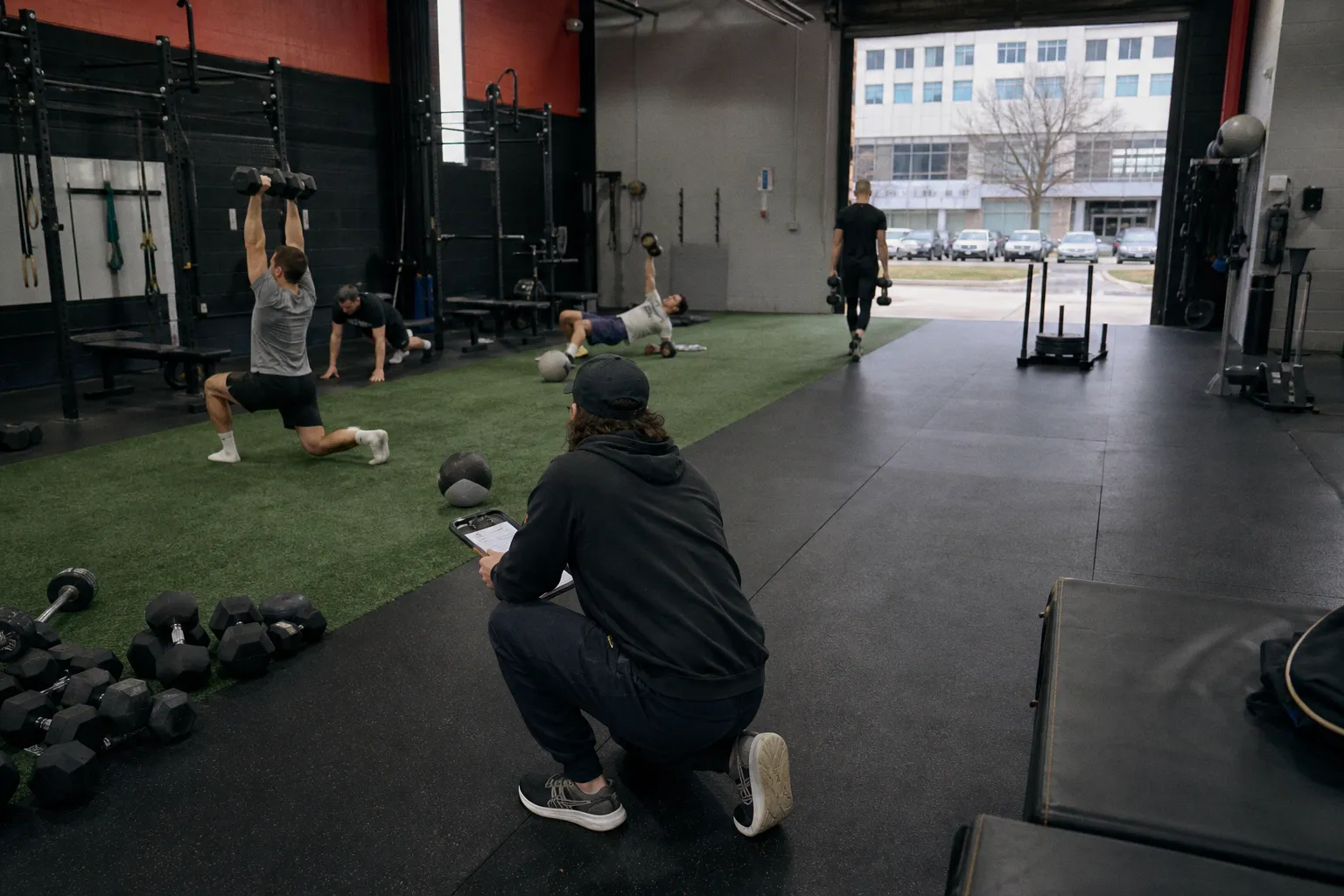
Mechanics of the Integrated Model
Three variables determine whether added force transfers to function.
First: force production. Progressive resistance still drives adaptation. Without sufficient load, the training signal is weak.
Second: kinematics. The lift must occur through positions the athlete can control. Range without control is not usable force. Load without range is limited force.
Third: recovery capacity. Tissue stress accumulates. If sleep, nutrition, and rest do not clear that stress, output decays across the training week.
The reporting frames the consumer question in functional terms: does training improve energy during the workday, sleep quality, stress resilience, and recovery after demanding weeks. That changes the job description. A stronger athlete with poor movement options has a smaller usable range. A stronger athlete who cannot recover is accumulating fatigue, not adapting. A stronger athlete whose gains do not transfer outside the gym has solved the wrong problem.
Playing Surface as a Load Variable
At the 77th Annual NATA Clinical Symposia in Philadelphia, athletic trainers discussed managing athletes under rising workloads and year-round competition. TenCate presented data on Pivot Performance Turf, a rubber-infill-free system designed to deliver more consistent surface response across repeated planting, cutting, sprinting, decelerating, and landing. The logic is biomechanical. A predictable surface reduces an uncontrolled variable. Less variance in the environment means tissue absorbs less unexpected force.
The same principle applies at the amateur level, though the surfaces differ. Trails, gym floors, turf fields, and asphalt each transmit force differently. Programming that ignores the surface assumes a uniform loading environment. That environment does not exist.
Protocol Adjustments
Four checkpoints for the amateur athlete treating training as a system.
One. Match force output to position quality. If a heavier squat compromises depth or knee tracking, the load exceeds the current kinematic capacity. Reduce it. Regain the position. Progress again.
Two. Track recovery the same way sets and reps are tracked. Persistent soreness, sleep disruption, and falling performance across the week are not badges of effort. They are feedback. Adjust volume before adding intensity.
Three. Schedule mobility inside the program, not after it. Hip, ankle, and thoracic range determine which lifts are available. Limited range narrows exercise selection and concentrates load on fewer tissues.
Four. Audit the surfaces you train and compete on. A new running route, a change in gym flooring, or a switch from turf to grass shifts the loading profile. Account for it during the first two weeks.
Strength remains the anchor. Integration is what makes it usable.