Choose Cardio or Mobility for Sore Muscle Active Recovery
Sore muscles have become a small industry. You train hard, wake up moving like a badly assembled folding chair, and suddenly everyone has a solution: a recovery drink with suspiciously heroic claims…
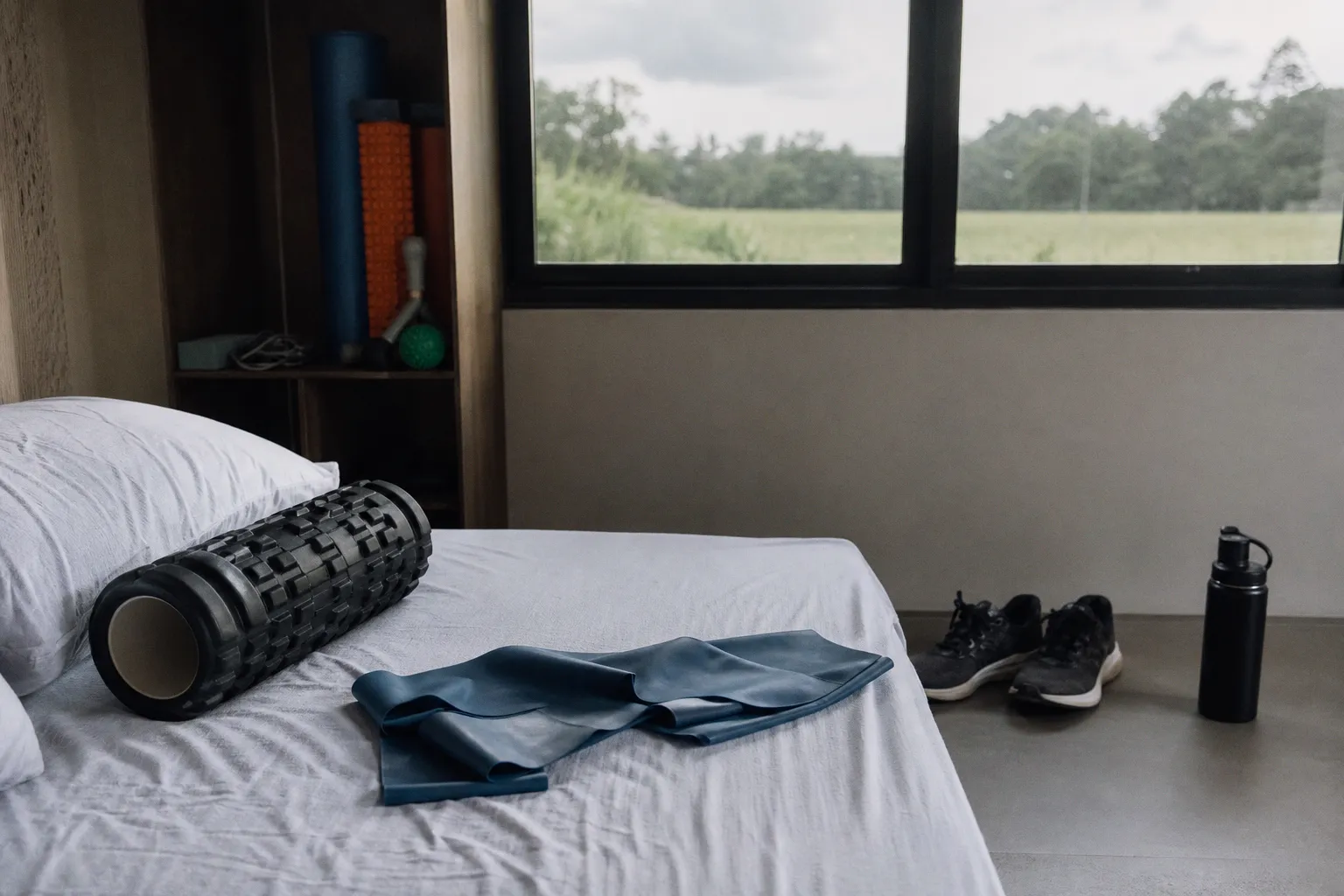
Sore muscles have become a small industry. You train hard, wake up moving like a badly assembled folding chair, and suddenly everyone has a solution: a recovery drink with suspiciously heroic claims, a compression sleeve, a percussion gadget, a “flush” session that looks a lot like another workout in disguise. Marketing loves soreness because soreness feels urgent.
Here is the less glamorous baseline: active recovery for sore muscles works best when it is actually recovery. That usually means low-intensity movement, not punishment with better branding. The practical question is not whether you should move — most athletes recover better with some movement than with total couch collapse — but what kind of movement you need today: light cardio, mobility work, or a boring little mix of both.
DOMS is not a badge of quality
Delayed onset muscle soreness, or DOMS, usually peaks somewhere in the 24- to 72-hour window after hard or unfamiliar training. Eccentric work is a classic trigger: downhill running, heavy lowering phases, lunges after a long break, a new strength block where your hamstrings learn about betrayal.
The soreness is not “lactic acid stuck in the muscle,” despite that myth somehow surviving longer than many training careers. Lactate clears far faster than your quads stop complaining. DOMS is more about muscle damage, inflammation, fluid shifts, and nervous system sensitivity after work your tissues were not fully prepared to handle.
That matters because it changes the recovery logic. You are not trying to “detox” anything. You are trying to reduce stiffness, improve circulation, preserve useful movement, and avoid adding more damage while the tissue repairs. Less cinematic, more effective.
Passive rest has its place. If you are sick, sleep-deprived, injured, or genuinely crushed, sitting still may be the correct adult decision. But for normal post-training soreness, low-intensity movement tends to reduce discomfort better than doing nothing. The mechanism is not magic: movement increases blood flow, brings oxygen and nutrients to working tissues, and helps clear metabolic byproducts. That is physiology, not a spa brochure.
Active recovery should leave you feeling more human, not more impressive.
The trap is that athletes hear “movement helps” and turn recovery into a second training session. A light spin becomes intervals. A walk becomes a weighted ruck. Mobility becomes a 50-minute battle with end-range positions you have not earned. Then they wonder why soreness stays around like a bad houseguest.
Cardio: the circulation tool, not the fitness test
Light aerobic work is the simplest option when soreness is widespread. If both legs feel heavy after squats, or your whole body is stale after a tournament weekend, cardio gives you systemic circulation. It moves blood through the system without asking one angry joint to solve a local problem.
The useful range is low. Think 30–60% of VO2 max, which in normal-person language means easy enough that you can breathe through your nose for stretches, talk in full sentences, and stop without feeling like you earned a medal. Walking, easy cycling, gentle swimming, and light rowing can all fit. The machine matters less than the intensity.
For most amateur athletes, 20–40 minutes is enough. I would rather see you do 25 honest easy minutes than 50 minutes that slowly turns into a secret endurance workout. Recovery cardio is a volume dial, not a toughness audition.
Good signs you are in the right zone:
1. Your soreness feels less sharp after five to ten minutes. You may still feel stiff, but movement starts to smooth out rather than escalate.
2. Your breathing stays boring. Boring is a compliment here. If you are bargaining with your lungs, you are training.
3. Your stride or pedal stroke improves as you go. Active recovery should restore rhythm, not expose more compensation.
4. You finish with more range and less heaviness. You do not need to feel fresh. You should feel less jammed.
5. You could repeat the same session tomorrow without dread. That is a decent field test for whether you kept it restorative.
Where cardio falls short is specificity. Easy cycling can reduce general leg soreness, but it may not fix the hip pinch that shows up every time you squat. A walk may improve circulation, but it will not magically restore shoulder flexion after heavy pressing. Cardio is a broad brush. Useful, yes. Precise, no.
There is also the fatigue accounting problem. Amateur athletes often stack stress without noticing: hard Tuesday session, poor sleep, work deadlines, then a “recovery run” that becomes tempo because the playlist got dramatic. Your body does not file stress by intention. It files it by load.
This is where planning matters. Choosing between recovery options is less exotic than people want it to be. It is like choosing between two conferences, races, or training camps: you match the event to the goal, not the logo. Even outside sport, people compare options this way — say, when deciding how to choose between ETHDenver and ETHGlobal hackathons — because the useful question is not “which one sounds better?” but “which one solves the actual problem?” Same principle with sore legs. If the problem is global heaviness, choose circulation. If the problem is a specific movement restriction, choose mobility.
Mobility: the local repair conversation
Mobility work gets abused in the opposite direction. Some athletes treat it like a religious practice: if ten minutes is good, surely an hour of elaborate floor positions will reveal a new personality. Others avoid it entirely because they tried static stretching once and felt no different.
Real mobility work sits between those extremes. It is controlled movement through usable range, often paired with breathing, light isometrics, and positions that nudge joints and tissues without provoking them. The goal is not to become bendy for social media. The goal is to regain positions your sport or training actually requires.
Mobility is often the better choice when soreness comes with stiffness in a specific area:
- Calves that feel like cables after hill sprints.
- Hip flexors that block stride length after speed work.
- Thoracic stiffness after heavy upper-body training.
- Ankles that refuse to cooperate after court sports.
- Adductors that complain after lateral lunges or change-of-direction work.
In these cases, a generic easy bike ride may help you feel warmer, but targeted mobility can address the movement compensation before it becomes your new technique. That is the part people miss. Soreness is not only discomfort; it can change how you move. If your hip is stiff, your low back may volunteer. If your ankle is locked, your knee may start taking odd angles. The body is generous like that, and not always wisely.
A useful mobility recovery session might look like this:
1. Start with five minutes of easy heat. Walk, bike, or move lightly until the area feels less guarded. Cold tissues are not morally inferior; they are just less cooperative.
2. Choose two or three target areas. Not twelve. If everything is a priority, you are just performing concern.
3. Use slow repetitions, not aggressive holds. Move in and out of range. Let the nervous system realize you are not attacking it.
4. Add light contractions. Gentle isometric pressure in a stretch can improve control, especially around hips, hamstrings, and shoulders.
5. Retest the relevant movement. Squat, hinge, reach overhead, lunge, rotate. If nothing changed, adjust the drill or stop pretending.
Foam rolling can fit here too. The better evidence suggests that post-exercise foam rolling can reduce DOMS and help maintain performance qualities like sprint speed and power. That does not mean the roller is breaking adhesions like a pastry chef flattening dough. The more likely story involves pressure, nervous system modulation, local blood flow, and temporary changes in pain perception and range.
Ten to twenty minutes is a reasonable window for foam rolling. More is not automatically better. If you are spending 45 minutes grinding your IT band while making the face of a condemned prisoner, the return on investment is questionable.
Mobility is not a punishment for being tight. It is a negotiation with tissue that has been asked to do more than usual.
Massage guns belong in the same category: potentially useful, often oversold. They can reduce perceived tightness for some athletes, and they are convenient. But I would not rank them above sleep, food, load management, or sensible movement. The device is an accessory. Accessories are where marketing goes to multiply.
Cardio vs. mobility: choose by the soreness pattern
The best choice depends on the pattern of soreness and the next training demand. This is where amateurs often get sloppy. They ask, “What is the best recovery method?” as if their body submitted a single universal ticket. Better question: “What is limiting me today?”
| Situation | Better first choice | Why it fits |
|---|---|---|
| Whole-body heaviness after a hard week | Light cardio | Improves systemic circulation without needing precise targeting |
| Local stiffness limiting a movement pattern | Mobility work | Restores usable range and reduces compensation risk |
| Mild leg soreness before an easy run day | Short cardio warm-up plus drills | Maintains rhythm without overloading sore tissue |
| Soreness after heavy eccentric lifting | Easy cardio plus gentle mobility | Circulation helps discomfort; mobility preserves positions |
| Joint feels irritated, sharp, or unstable | Neither as a fix | That is not normal DOMS; reduce load and assess the issue |
| Poor sleep plus high soreness | Sleep first, then very light movement | Recovery debt is not solved by more clever movement |
If soreness is diffuse, start with cardio. If soreness is local and changes your mechanics, start with mobility. If you are unsure, combine them: 10–15 minutes of easy aerobic work followed by 10 minutes of targeted mobility. That combination is boring enough to work.
The only version I dislike is the “recovery workout” that has a warm-up, main set, accessory circuit, finisher, and a caption about listening to your body. That is not listening. That is negotiating with marketing in gym clothes.
The recovery window is not a dare
DOMS usually peaks between 24 and 72 hours, which means your recovery choices should change across that window.
The day after hard training
This is where active recovery shines. You are sore, but not necessarily impaired. A light cardio session can reduce stiffness and make normal movement feel less tragic. If you lift on Monday and wake up sore Tuesday, an easy bike ride, walk, or swim often beats total rest.
Keep mobility gentle. The tissue is sensitized. You do not need heroic end-range stretching. You need circulation, low threat movement, and enough range to keep tomorrow from being worse.
The second day
This is often the peak soreness day. Many athletes panic here because they assume something has gone wrong. Usually, nothing has. This is the normal delayed part of delayed onset muscle soreness.
If soreness is high, choose low-impact cardio and short mobility. Cycling is often kinder than running when quads or calves are sore. Walking is underrated because it is too cheap to be marketed properly. If your sport requires running, you can still walk first, then decide whether a few relaxed strides make sense.
The third day and beyond
Soreness should begin to trend down. If it does, you can gradually return to normal training, but do not treat reduced pain as full tissue readiness. Warm up longer, reduce load if movement quality is off, and avoid chasing personal records just because your legs are no longer filing a formal complaint.
If soreness is not improving, or if pain is sharp, localized near a tendon or joint, associated with swelling, or changes your gait, stop calling it DOMS. Words matter. Calling every pain “soreness” is how small problems get promoted.
What I would program for different athletes
Active recovery for sore muscles in amateur athletic training should match the sport and the training plan. A runner, a lifter, and a recreational basketball player do not need identical recovery menus.
The runner with sore calves and quads
I would usually start with 20–30 minutes of walking or easy cycling. If running is used, it should be genuinely easy and short, not a disguised mileage grab. Then add ankle rocks, calf eccentrics at low volume, hip flexor mobility, and gentle hamstring flossing. The goal is to restore stride mechanics, not “flush toxins,” a phrase that should be retired and perhaps composted.
The lifter after a high-volume leg day
Use a low-impact bike or incline walk for circulation. Then hit hips, ankles, and thoracic rotation. Foam roll quads, adductors, glutes, and calves for 10–15 minutes total if it helps you move better. I do not care whether you love the roller. I care whether your squat pattern looks less like a hostage negotiation afterward.
The field or court athlete after repeated sprints
Here I lean toward a blend. Easy cycling or pool movement reduces global leg heaviness. Then mobility should target calves, hip flexors, adductors, and trunk rotation. Change-of-direction sports punish tissues in multiple planes, so your recovery should not live only on a stationary bike.
The desk-bound athlete who trained hard last night
This person often needs movement snacks more than one formal recovery session. Walk ten minutes after meals. Do a few hip and thoracic mobility drills between work blocks. Sitting all day after hard training is a reliable way to make soreness feel worse. Not because sitting is evil — spare me the lifestyle sermons — but because tissues like regular low-level input.
Sleep and nutrition: the unsexy hierarchy
I am a dietitian, so I am legally required to disappoint anyone hoping for a secret recovery food. The hierarchy is not mysterious.
Sleep is the foundation. Athletes should generally aim for 7–9 hours of quality sleep. That is when a lot of tissue repair, hormonal regulation, and nervous system recovery get handled. Mobility work does not replace sleep. Foam rolling does not replace sleep. A cherry-flavored recovery powder with a muscular label does not replace sleep.
Nutrition is next. You need enough total energy, enough protein, enough carbohydrate to support training, and enough fluid and sodium to replace what you lose. This is sufficiency, not purity. I do not care whether your post-workout meal looks “clean.” I care whether it contains the raw materials your body needs and whether you can repeat it without turning your life into a part-time catering business.
A practical recovery plate after hard training looks less dramatic than advertising prefers:
- A protein source you tolerate well: eggs, dairy, fish, meat, tofu, tempeh, legumes, or a simple protein shake if food timing is awkward.
- Carbohydrate to refill glycogen: rice, potatoes, oats, pasta, fruit, bread, tortillas, cereal. Yes, cereal. The body does not require your carbs to have a personal brand story.
- Color from plants because micronutrients matter, not because vegetables have moral superiority.
- Fluids and sodium, especially if the session was hot, long, or sweaty.
Oxidation and inflammation are normal parts of training adaptation. The goal is not to carpet-bomb every inflammatory signal with supplements. Some inflammation is part of the repair process. The job is to avoid excessive damage and give the body enough resources to adapt.
If your recovery plan contains a massage gun, compression boots, contrast baths, and three supplements, but you sleep six hours and under-eat because you are “cutting,” your plan has a luxury roof and no foundation. Very modern. Not very useful.
A simple way to decide today
Use the next-session test. Ask what you need to be able to do in your next meaningful workout.
If tomorrow is a key run session and your legs are generally heavy, easy cardio today may keep the system moving without adding stiffness. If tomorrow is a squat session and your hips and ankles are restricting depth, mobility deserves more attention. If tomorrow is rest anyway, choose the option that makes normal movement feel better and does not create new fatigue.
Here is my minimalist decision tree, without pretending it is a medical device:
1. Is the pain sharp, swollen, unstable, or changing how you walk? Do not solve that with recovery cardio or mobility bravado. Back off and assess it.
2. Is soreness general and dull? Start with 20–30 minutes of light cardio.
3. Is stiffness local and limiting a position? Start with 10–20 minutes of targeted mobility.
4. Are both true? Do 10–15 minutes of easy cardio, then 10 minutes of mobility.
5. Are you exhausted or sleeping badly? Reduce the session to a walk and go to bed earlier. Revolutionary, I know.
The intensity cap is the part people resist. Active recovery should sit well below training stress. If you need a watch, a score, a leaderboard, or a heroic playlist to validate it, you are probably drifting away from recovery and toward ego maintenance.
The blunt answer
Choose cardio when soreness is broad, heavy, and systemic. Choose mobility when stiffness is specific, positional, and starting to distort how you move. Combine them when both are present, but keep the total dose modest. Add foam rolling if it helps you move better and reduces discomfort, not because the internet said your fascia needs a personality adjustment.
And keep the hierarchy straight: sleep 7–9 hours when you can, eat enough, hydrate, manage training load, then use active recovery as a useful nudge. Not a cure, not a ritual, not a product category waiting for your credit card.
Sore muscles are part of training. Staying sore because every recovery day becomes another workout is optional.
FAQ
How do I know if I should choose cardio or mobility for recovery?
What is the best intensity for active recovery cardio?
How long should a recovery mobility session last?
Is foam rolling actually effective for sore muscles?
When should I stop treating soreness as DOMS and seek help?
By Nelson Gould