Knee strengthening exercises for runners: static vs dynamic
Most runners discover knee strengthening exercises for runners in the least glamorous way possible: the knee starts complaining, the mileage suddenly looks suspicious, and the internet offers either…
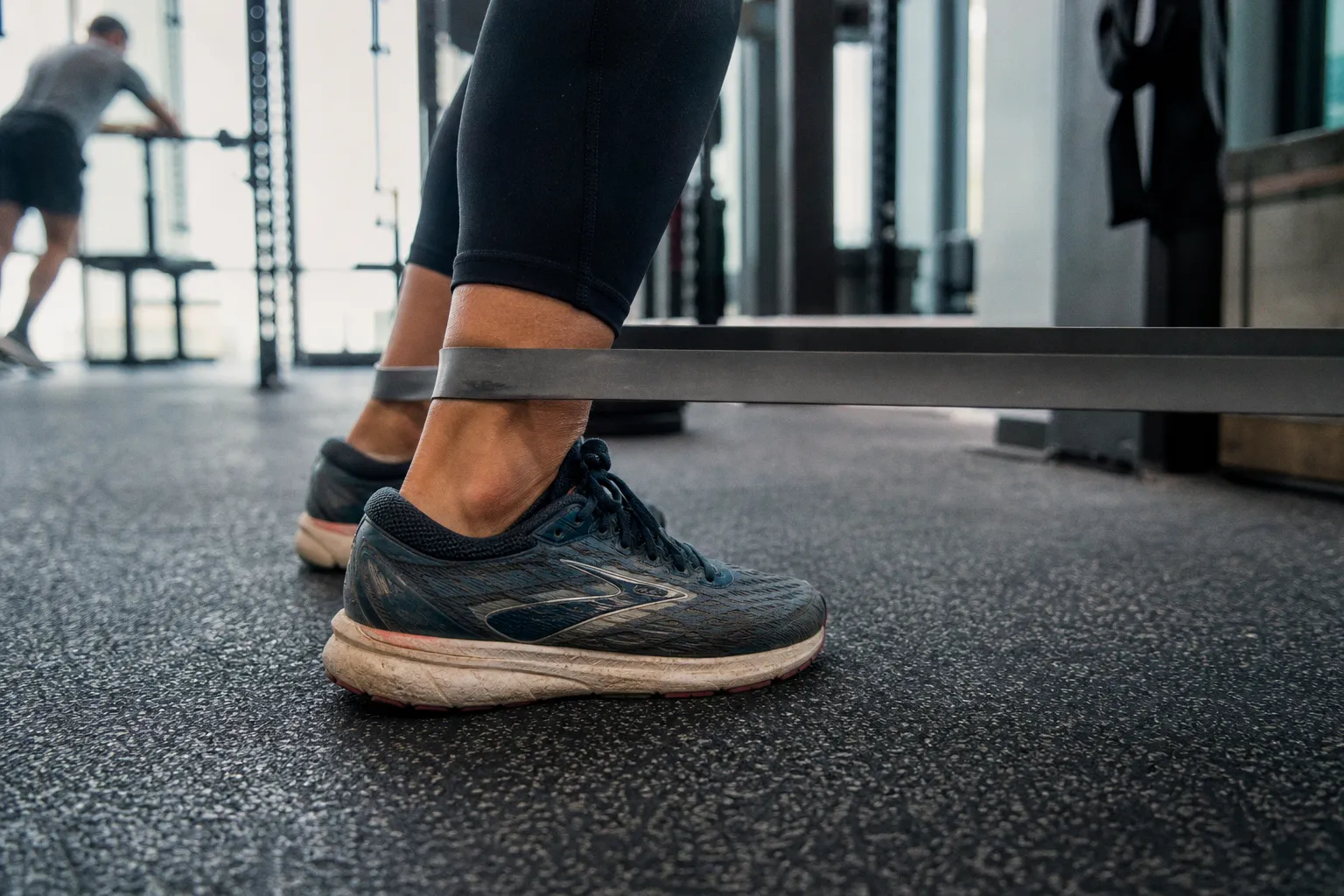
Most runners discover knee strengthening exercises for runners in the least glamorous way possible: the knee starts complaining, the mileage suddenly looks suspicious, and the internet offers either a miracle three-minute fix or a stern lecture about “activating” something you did not know had gone on strike.
Here is the less marketable version. Your knee does not need a secret protocol. It needs load tolerance, better control under fatigue, and a reasonable progression from simple force production to the messy business of running. Static exercises and dynamic exercises both belong in that picture. They are not rival tribes. They are tools, and using the wrong one at the wrong time is how amateurs turn a small irritation into a season-long negotiation.
Static knee work: useful, boring, and often misunderstood
Static knee exercises — isometric holds, if we are using the adult name — ask the muscles and tendons around the knee to produce force without visible joint movement. Think wall sits, Spanish squats, static split squats, or holding the bottom of a lunge. Nothing flashy happens. No one sells many memberships with “hold still and breathe normally.” Pity, because it works.
For runners dealing with cranky tendons or early-stage pain, static holds can be a sensible first move. They allow you to load the quadriceps, patellar tendon, and surrounding tissues without the repeated joint movement that can irritate symptoms when things are already touchy. A 30- to 60-second wall sit is not magic. It is controlled stress. That is the point.
This is where marketing tends to get silly. Isometric knee exercises for runners are often presented as either a rehabilitation miracle or a waste of time because they do not “look athletic.” Both takes miss the baseline physiology. Tendons adapt to load. Muscles get stronger when asked to produce force. Pain-sensitive tissues often tolerate steady contraction better than bouncing in and out of position. None of that requires a proprietary app or a man in compression tights whispering about optimization.
A useful static session might include:
1. Wall sit, 3–4 holds of 30–60 seconds.
Feet roughly hip-width apart, knees bent to a tolerable depth, back against the wall. If the knee pain jumps sharply, reduce the depth. If it feels like honest muscular effort, you are probably in the right neighborhood.
2. Spanish squat hold, 3–4 holds of 30–45 seconds.
A strap or heavy band sits behind the knees, letting you sit back while keeping the torso upright. Many runners find this friendlier than a regular squat when the patellar tendon is irritable.
3. Static split squat hold, 2–3 holds of 20–45 seconds per side.
This starts to expose the body to single-leg demands without adding movement yet. It is also a useful way to notice side-to-side differences, which runners are very good at ignoring until a race week.
Static work is especially useful when the knee is not ready for repeated bending, landing, or deceleration. But static work has a ceiling. Running is not a wall sit performed while moving forward in expensive shoes. At some point, the knee has to control motion.
Isometrics can calm the room down. They cannot teach the room to dance.
Dynamic exercises: where running actually starts to resemble training
Dynamic runner knee workouts involve movement: squats, lunges, step-downs, single-leg squats, lateral lunges, hopping progressions, and eventually faster or more elastic drills. These exercises matter because running is a sequence of controlled collapses. Every stride asks the leg to absorb force, stabilize the pelvis, control knee position, and push off again before you have time to make a motivational quote about it.
Dynamic exercises are better at building neuromuscular control because they train the body to coordinate force through range. The quadriceps lengthen and shorten. The glutes have to contribute. The foot and ankle stop being passengers. The trunk gets exposed for whatever it has been doing during your last few thousand steps.
For injury prevention, this is not decoration. Dynamic strength work mimics the eccentric loading demands of running: the muscle is producing force while lengthening, especially as the body lands and the knee flexes. That is where many runners leak control. Static holds can build load tolerance, but dynamic work teaches the system to use that tolerance while the joint angle changes.
A simple dynamic progression can look like this:
| Training goal | Exercise example | What it teaches | Useful dosage |
|---|---|---|---|
| Basic knee control | Sit-to-stand or goblet squat | Symmetrical knee bending and quad loading | 3–4 sets of 8–12 reps |
| Single-leg control | Step-down from a low box | Knee tracking under body weight | 3 sets of 8–10 reps per side |
| Hip-knee coordination | Reverse lunge | Glute and quad contribution together | 3–4 sets of 8–12 reps per side |
| Frontal-plane control | Lateral lunge | Control outside straight-line running | 2–3 sets of 8–10 reps per side |
| Running-specific stiffness | Low-level pogos or small hops | Tendon spring and landing control | Introduce cautiously, low volume |
That table is not a commandment. It is a progression. The difference matters. If your knee is irritated walking downstairs, you do not earn moral points for jumping into hop work. If you can run 30 miles a week but cannot control a slow step-down, your problem is probably not that your shoes lack enough marketing foam.
Static vs dynamic: the comparison runners actually need
The usual argument — static versus dynamic — is slightly fake. It sounds tidy, which is why people like it. The practical question is not which type is “better.” The practical question is what your knee needs right now.
Static exercises are usually better when pain is present, tissue tolerance is low, and you need to reintroduce load without movement. Dynamic exercises are better when the goal is controlling the knee during actual athletic tasks: landing, bending, rotating, accelerating, decelerating, and handling fatigue.
Here is the cleaner comparison.
| Parameter | Static knee exercises | Dynamic knee exercises |
|---|---|---|
| Main job | Build initial load tolerance and reduce threat from movement | Build control, strength, and coordination through range |
| Best fit | Early-stage tendon irritation, painful flare-ups, return-to-load phase | Injury prevention, return to running, performance support |
| Common examples | Wall sit, Spanish squat hold, static lunge hold | Split squat, step-down, single-leg squat, lunge, lateral lunge |
| Typical dosage | 30–60 second holds, 2–4 rounds | 3–4 sets of 8–12 reps for strength work |
| Main limitation | Does not fully prepare the knee for impact or changing joint angles | Can irritate symptoms if introduced too aggressively |
| Runner mistake | Staying here forever because it feels safe | Starting here too hard because it feels productive |
I like static work. I also like carbohydrates before hard sessions, and somehow that has not stopped the internet from trying to make both unnecessarily dramatic. The principle is sufficiency: enough load to create adaptation, not so much that you buy yourself three days of limping.
The hip-knee connection: your “bad knee” may be taking orders from upstairs
Runners love local explanations. Knee hurts, therefore knee is weak. Sometimes, yes. Often, not exactly.
One of the most common mechanical issues in runners is knee valgus: the knee drifting inward during stance, squatting, landing, or fatigue. This is not automatically a disaster, and a single photo from one stride is not a diagnosis. But repeated inward collapse under load can increase stress around the knee, especially when combined with high mileage, poor recovery, or a sudden training spike.
A major contributor is weakness or poor control in the hip abductors, especially the gluteus medius. The gluteus medius helps control the pelvis and femur. If it cannot do its job well, the thigh may drift inward, and the knee follows. The knee then gets blamed like the intern who was nearest the printer when it jammed.
This is why quad vs glute knee strengthening is the wrong fight. You need both. The quadriceps help control knee flexion and load the patellar tendon. The glutes help position the femur and pelvis so the knee is not constantly negotiating bad angles.
For runners, a useful hip-knee strength block might include:
- Side plank with top-leg lift.
Not glamorous, but it makes the lateral hip work without turning everything into a balance circus.
- Banded lateral walks.
Keep the pelvis level and the feet controlled. If you look like you are doing a nightclub crab walk, reduce the band tension.
- Step-downs.
Watch the knee track over the middle toes. The goal is not military stiffness; it is controlled movement without the knee diving inward.
- Rear-foot-elevated split squat.
A strong option once symptoms allow it. It loads the quad and glute together, which is more relevant than isolating muscles like they have separate hobbies.
- Single-leg Romanian deadlift.
Useful for posterior-chain control and pelvis stability. If balance is the limiting factor, start with a hand lightly touching a wall.
Prehab exercises for runner knee pain should not be a random pile of movements copied from five physical therapists with excellent lighting. Pick a small menu. Train it two to three times per week. Progress it when it becomes easy. That is less exciting than “unlocking your kinetic chain,” but it has the advantage of being real.
The knee-over-toe myth: a sturdy little piece of nonsense
Few myths have had better endurance than “never let your knee go past your toes.” It refuses to die, possibly because it sounds protective. It is also too simple to be useful.
The knee-over-toe position is not inherently harmful. In running, stairs, squatting, lunging, and most sports, the knee travels forward. That forward movement helps load the quadriceps and patellar tendon through a fuller range of motion. Avoiding it forever does not make the knee safer. It often makes the knee less prepared for the positions running will ask it to tolerate anyway.
The issue is not whether the knee moves forward. The issue is whether the runner has the strength, control, and tissue tolerance for the movement being trained.
A forward-knee split squat can be excellent when introduced well. A deep, fast, loaded lunge on an irritated tendon can be a poor idea. Same joint angle, different context. Context is where most online arguments go to starve.
To use knee-over-toe work sensibly:
1. Start with controlled tempo.
Lower slowly. Pause briefly. Stand up with control. If you have to bounce, twist, or bargain with gravity, the load is too high.
2. Use a tolerable range first.
You do not need maximum depth on day one. Range of motion is trained, not demanded.
3. Let symptoms guide progression, not fear.
Mild muscular effort is fine. Sharp pain, worsening symptoms, or next-day flare-ups mean the dose was wrong.
4. Progress from body weight to load.
Add dumbbells, a vest, or a slower tempo only after the movement is boring. Boring is often the gateway to durable.
This is also where footwear debates get too much credit. Shoes may change loading patterns. They do not cancel the need for basic strength and control. If your knee caves inward during a slow single-leg squat, the outsole is not the main character.
The knee-over-toe position is not a villain. Poor dosage is.
How to build a progression that does not insult your tissues
The knee adapts to progressive overload. This is true whether you are lifting, running hills, or returning from a tendon flare-up. The problem is that runners often understand progressive overload for mileage and then abandon the concept in the gym. They go from zero strength work to a heroic leg day, then act betrayed when stairs become a legal dispute.
A better plan moves from static to dynamic to multi-planar, then to running-specific impact. Not because every runner must pass a sacred test, but because tissues and coordination both need time.
Phase 1: restore tolerance
Use this when knee pain is present, especially if dynamic bending is irritating.
- Wall sit: 3–4 x 30–60 seconds
- Spanish squat hold: 3–4 x 30–45 seconds
- Static split squat hold: 2–3 x 20–45 seconds per side
- Calf raise hold or slow calf raise: 2–3 sets
Keep effort moderate to hard, not heroic. If symptoms increase and stay elevated after the session, reduce depth, duration, or volume.
Phase 2: control movement
Use this when daily activities and easy running are tolerable, but the knee still feels unreliable under load.
- Goblet squat: 3–4 x 8–12
- Step-down: 3 x 8–10 per side
- Reverse lunge: 3 x 8–12 per side
- Side plank or lateral hip work: 2–3 sets
This is where most recreational runners should spend more time. Not forever, but long enough to develop visible control. A slow step-down tells the truth. If the pelvis drops, the knee dives inward, and the foot grabs the floor like it has received bad news, you have found your homework.
Phase 3: add planes and speed
Use this when controlled strength work is solid and running volume is stable.
- Lateral lunge: 2–3 x 8–10 per side
- Rear-foot-elevated split squat: 3 x 8–10 per side
- Single-leg squat to box: 3 x 6–10 per side
- Low pogo hops: 2–4 short sets
- Skipping or low-level bounds, only if pain-free and controlled
Runners live in the sagittal plane — forward, forward, forward — until a pothole, camber, trail turn, or fatigue reminds them that joints operate in three dimensions. Multi-planar work is not circus training. It is insurance against the body being surprised by normal life.
Strength dosage and running volume: the part nobody can outsource
For most amateur runners, two to three strength sessions per week is enough to move the needle. That does not mean two to three maximal lower-body beatings. It means consistent exposure to useful loading.
Dynamic strength work often sits well at 3–4 sets of 8–12 repetitions. Static work commonly fits 30–60 second holds. These are not sacred numbers, but they are good working ranges. If you are always below them, you may not be applying enough stimulus. If every session requires a recovery saga, you are confusing commitment with oxidation of common sense.
Running volume matters too. A common guideline is to avoid increasing weekly running volume by more than about 10–15%. This is not a magical injury shield; bodies are not spreadsheets. But sudden spikes are a reliable way to expose weak links. If you add hills, speed work, long-run distance, and new strength exercises in the same week, do not act shocked when the knee files a complaint.
Here is a reasonable weekly setup for a runner building knee resilience:
| Day | Running focus | Strength focus |
|---|---|---|
| Monday | Easy run or rest | Static holds plus hip stability |
| Tuesday | Quality run or moderate mileage | No heavy lower-body work |
| Wednesday | Easy run | Dynamic strength: squats, step-downs, lunges |
| Thursday | Rest or easy cross-training | Mobility or light calf/hip work |
| Friday | Easy run with strides | Optional short static maintenance |
| Saturday | Long run | No lower-body strength afterward unless very light |
| Sunday | Rest or recovery run | Dynamic strength if recovered |
Adjust this around your actual life. The body does not care that a spreadsheet looks elegant. If sleep is poor, food is inconsistent, and your long run became an accidental race, reduce the gym load. As a dietitian, I will also say the unpopular quiet part: under-fueled runners get hurt more easily because recovery is not powered by vibes. Energy availability, protein sufficiency, and enough carbohydrate around harder work are not glamorous. They are baseline.
No, collagen powder in a pretty tub will not rescue a badly progressed training plan. Some supplements may have specific uses, but they are not the foundation. The foundation is load, recovery, food, sleep, and not doubling your hill volume because the weather was nice.
When pain changes the rules
This is not medical advice, and your knee is not a podcast topic. Persistent pain, swelling, locking, giving way, or symptoms that worsen despite reducing load deserve assessment from a physical therapist or sports medicine clinician. The point of strength work is not to prove toughness. It is to restore capacity.
A practical pain rule: discomfort that stays mild, predictable, and settles within a reasonable window is different from pain that escalates during the session or leaves you worse the next day. The first may be manageable with adjusted loading. The second is feedback. Ignore feedback long enough and it becomes a diagnosis.
Also, do not assume all knee pain is caused by weak knees. It may involve hip control, ankle mobility, tendon irritability, training errors, footwear changes, running surface, or plain old accumulated fatigue. The knee is often the site of symptoms, not the sole author of the problem.
The blunt version: use both, in the right order
Static and dynamic knee strengthening exercises for runners are not competitors. Static work is the entry point when symptoms are high or tolerance is low. Dynamic work is the bridge back to the demands of running. Hip strength keeps the knee from inheriting every problem from above. Knee-over-toe training is normal when progressed intelligently. Load progression is the whole game.
If your plan is only wall sits, it is incomplete. If your plan is only aggressive lunges and hops, it may be premature. If your plan changes every week because someone on the internet found a new “secret” glute drill, your knee is probably not confused by biomechanics. It is confused by you.
Build a baseline. Train strength two to three times per week. Progress from holds to controlled movement to multi-planar work. Keep weekly mileage increases modest. Eat enough to recover. See a professional if pain persists.
That is not a sexy protocol. Good. Sexy protocols have a suspicious injury rate.
FAQ
Should I avoid letting my knees go past my toes during exercises?
How often should a runner perform knee strengthening exercises?
Why does my knee hurt when I run if I have strong legs?
When should I switch from static to dynamic knee exercises?
How do I know if my knee pain is too severe for exercise?
By Nelson Gould