Chocolate can set you up for a better workout … just don’t eat it
A report from The Times and a follow-up summary in Bioengineer.org highlight a small finding with direct relevance for athletes who train fasted: smelling chocolate appears to reduce the cost of a leg session, without actually consuming it.
Duncan Reed·updated July 10, 2026
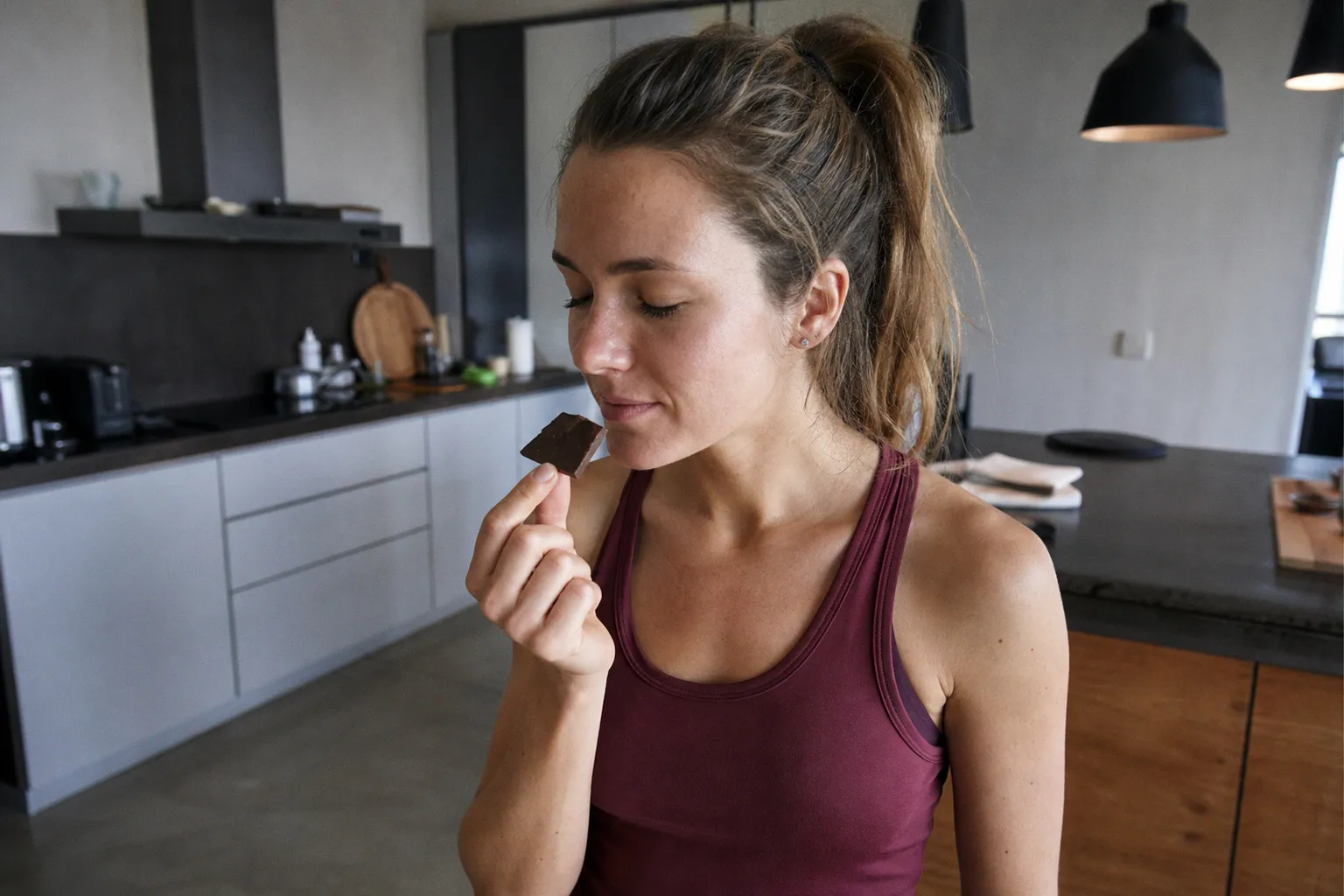
What the report covers
Per the Bioengineer.org summary, the protocol tested chocolate aroma as the sole intervention before a lower-body resistance workout performed in a fasted state. Food intake was removed from the equation. The outcome, as reported: the session felt less punishing than the same workout performed without the scent on board.
That isolation is the point. Most pre-workout stacks arrive bundled — caffeine, carbohydrates, hydration, anticipation, environment. Removing the fuel variable leaves a cleaner test of what the aroma alone does on perceived load and force tolerance during a session.
The conditioning lens
For lifters operating under caloric restriction, intermittent fasting protocols, or compressed morning schedules, available levers narrow. Sleep, caffeine timing, and warm-up structure carry most of the variance. A controlled olfactory cue adds a single extra variable at zero caloric cost. A deliberate, brief exposure to chocolate aroma at session open — before the first working set — is the minimum viable intervention.
This is not a substitute for adequate fueling on fed training days. Under true energy restriction, the primary drivers of strength loss remain energy balance, sleep, and recovery. Aromatic priming cannot outwork a deep energy deficit. It can blunt the perceived cost of a fasted session you have already committed to running.
How to run the test
Run the cue across a block of identical sessions. Match warm-up, load, and movement selection to two prior baseline sessions performed without the aroma. Log session RPE at fixed tonnage. If perceived effort trends down with the cue in place, the lever carries real signal for you. If the data stays flat, the limiter lives elsewhere — most likely sleep, daily intake, or absolute load progression.
The takeaway is narrow. Aromatic priming is a low-cost, low-risk variable to add inside a planned fasted block. It does not replace food. It does not replace rest. It is one dial inside a system that already includes music, caffeine, and warm-up structure. Some lifters will register a measurable shift. Some will not. Let the session log decide.