Olympic Bumper Weight Plates Sets Released for Varied Home Fitness Routines by Strongway Gym Supplies
Strongway Gym Supplies has released a line of Olympic bumper weight plate sets targeting varied home training setups, according to a recent listing in the Democrat and Chronicle.
Duncan Reed·updated July 11, 2026
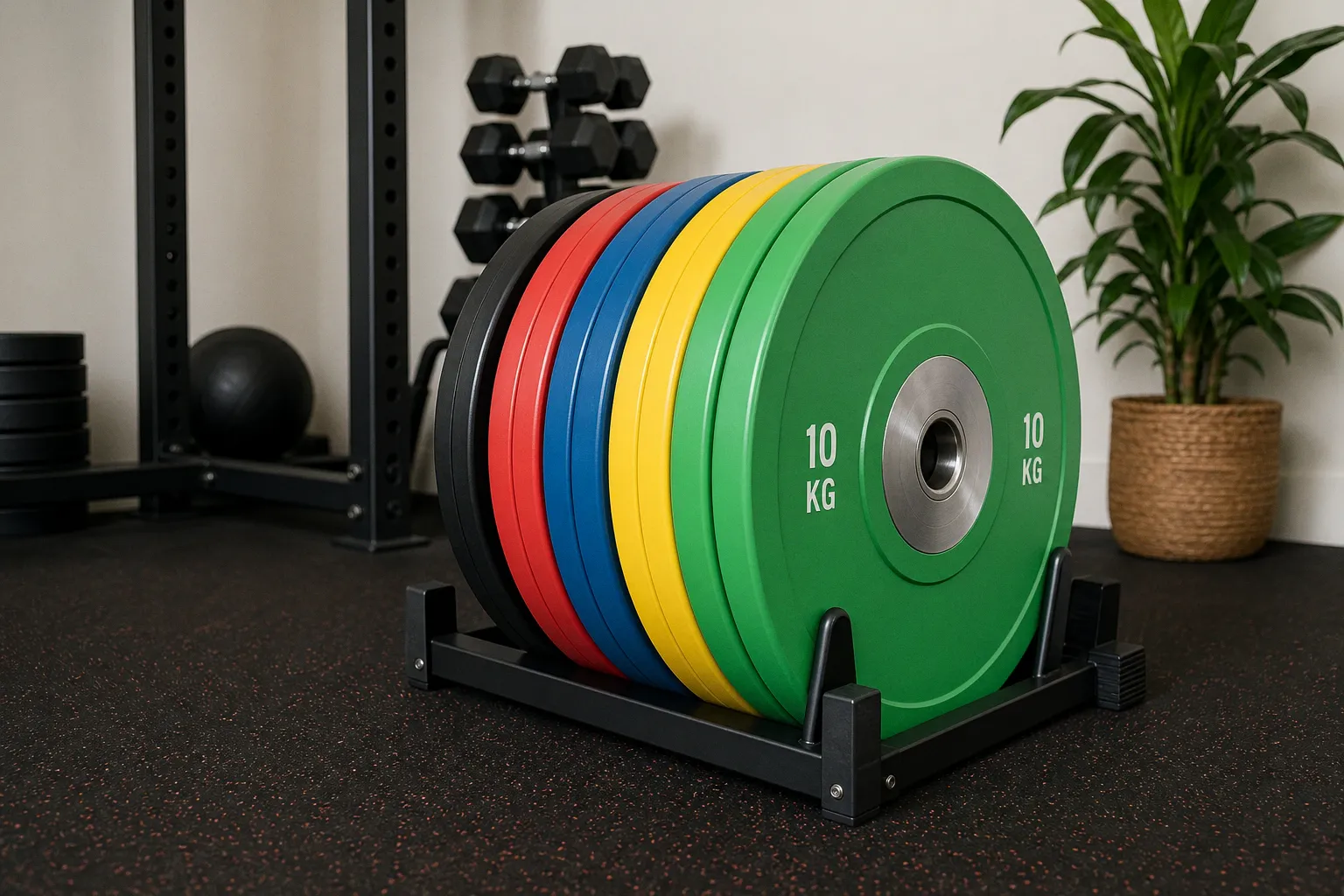
What the plate format changes
Olympic bumper plates share a 450 mm outer diameter. Bar height stays constant under load. Plate-to-plate transition stays uniform. The lifter works through the same kinematic path whether the bar holds 40 kg or 140 kg. The rubber allows controlled drops from overhead, removing the usual risk of floor damage or plate fracturing when a lift is missed.
Without bumpers, home training defaults to dumbbell, kettlebell, or fixed-bar work. With them, the bar can be moved vertically with intent — presses, cleans, snatches — at loads sufficient to challenge the posterior chain. For the recreational athlete, the equipment extends the programming window, but only if the lifts are technical enough to handle real load in the first place.
Load geometry and floor systems
Bumper plates are wide per kilogram. The total sleeve thickness caps practical loading somewhere in the 180–220 kg range, depending on plate-set composition. Most home users never approach this. Anyone treating the purchase as an open-ended investment should confirm plate thicknesses before committing.
The second constraint is the floor. A loaded bar dropped from overhead delivers peak ground reaction force several times bodyweight. Poured concrete handles it. Suspended wood floors do not. A 3/4-inch rubber platform, horse-stall mat, or comparable surface is part of the system, not an upgrade.
Rubber durometer also matters. Softer compounds dull impact but crack sooner under repeat drops. Harder compounds hold tolerance longer and transmit more force to the floor and to the bar's bearings. The available source coverage does not publish those specifications for this set. The reliable move is to request them from the vendor directly before purchase.
Protocol for a new plate set
1. Run the empty bar first. Establish a vertical bar path. Film from two angles.
2. Add load in symmetric jumps until bar deviation exceeds a tolerable threshold.
3. Stop there. Reset the pattern before the next set.
4. Cap overhead drops at loads where full lockout recovery is consistent.
5. Treat plate changes as tolerance checks, not as added training volume.