Why prehab exercises protect joints from overuse injuries
Overuse injuries account for roughly 50% to 70% of all sports-related injuries in amateur athletes. The mechanism is mechanical, not mysterious. Repetitive loading exceeds the adaptive capacity of muscle, tendon, and connective tissue.
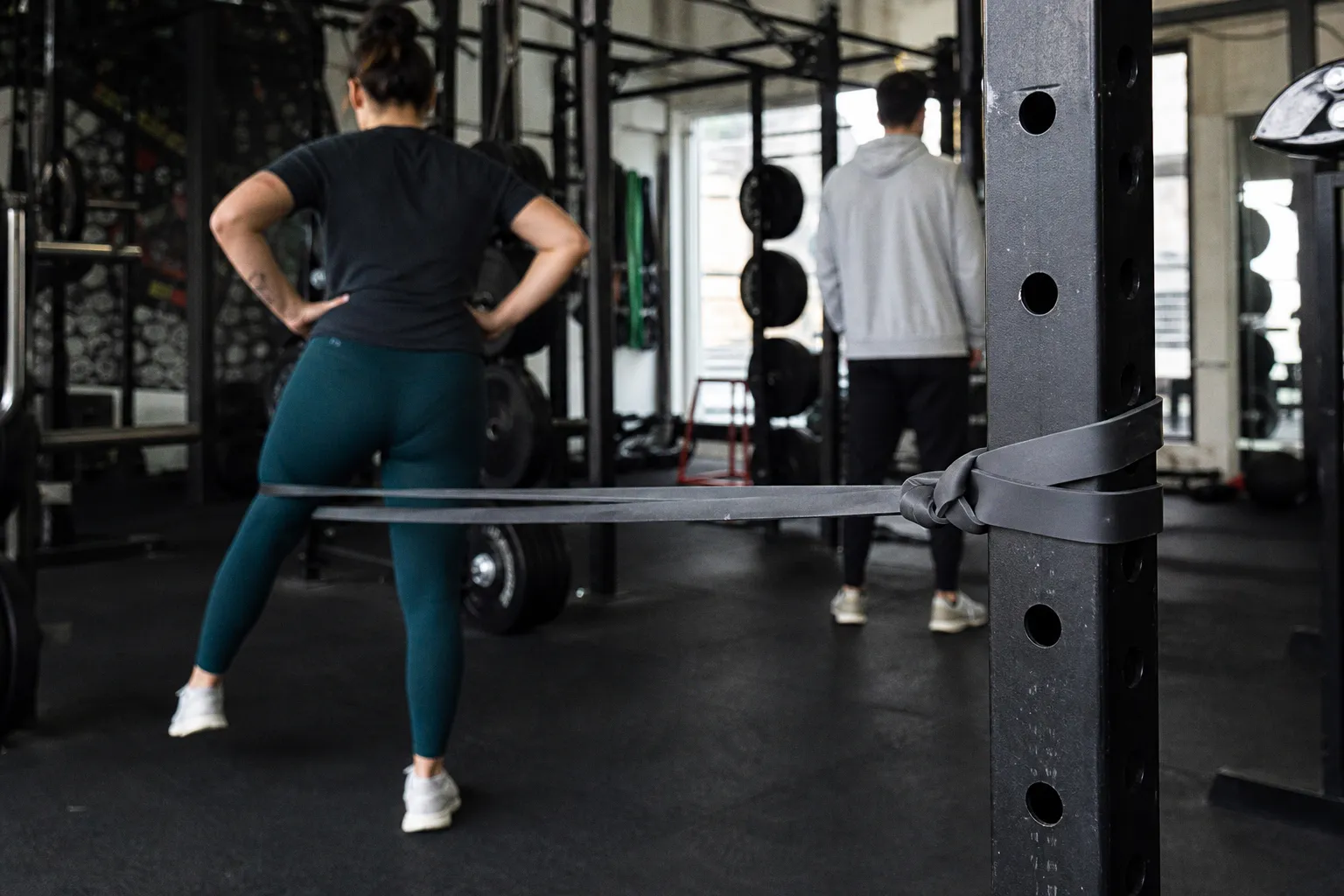
The amateur athlete operates on a narrow margin. Training volume increases faster than tissue tolerance. Form degrades under fatigue. Stabilizing muscles fatigue before prime movers. The result is a kinetic chain that compensates through poor movement patterns, and the joints absorb force they were never designed to handle. Prehab exercises target these weak links directly. They build the structural capacity that repetitive training demands.
The Mechanics of Overuse: Why Repetitive Loading Fails the Body
Overuse injuries are cumulative. They emerge from repetitive microtrauma, not single catastrophic events. Each repetition deposits small mechanical stress on tissue. Under normal conditions, recovery rebuilds the structure slightly stronger. The system adapts. The problem emerges when stress outpaces recovery.
Three mechanical factors drive overuse failure in amateur athletes:
1. Load accumulation. Total weekly force exposure exceeds tissue remodeling capacity. Tendons, ligaments, and cartilage adapt slowly. Muscles adapt faster. The mismatch creates instability under load.
2. Movement degradation. Form deteriorates as fatigue sets in. Joint angles shift. Force vectors deviate from optimal paths. The same exercise becomes a different mechanical event at repetition 30 versus repetition 5.
3. Stabilizer lag. Deep stabilizing muscles fatigue earlier than primary movers. When the gluteus medius fails, the hip drops. The knee tracks inward. Load concentrates on the patellofemoral joint. The chain collapses at its weakest link.
Prehab exercises interrupt this sequence. They train the stabilizers under controlled conditions. They build load tolerance in structures that prime-mover training neglects. The goal is structural redundancy: a system with enough margin to absorb training stress without failing.
Prehab is not a warm-up. It is mechanical insurance. The stabilizers are the structural components that determine whether repeated load becomes adaptation or injury.
Identifying Kinetic Chain Weak Links in Amateur Athletes
A weak link is a structure that fails before the rest of the system reaches its load limit. In running athletes, the gluteus medius is the most common weak link. Weakness in this muscle correlates directly with patellofemoral pain syndrome, also known as runner's knee. The mechanism is kinematic. The hip collapses into adduction and internal rotation. The knee follows. Load shifts to the medial patellofemoral joint. Cartilage stress accumulates.
Other common weak links include:
- Hip abductors (gluteus medius, gluteus minimus): control frontal plane pelvic stability. Failure drives knee valgus and IT band syndrome.
- Rotator cuff musculature (supraspinatus, infraspinatus, teres minor, subscapularis): stabilize the humeral head in the glenoid. Fatigue drives impingement and rotator cuff tendinopathy in overhead athletes.
- VMO (vastus medialis oblique): the medial quadriceps component that controls terminal knee extension. Inhibition contributes to patellar tracking dysfunction.
- Deep core stabilizers (transverse abdominis, multifidus): control lumbar-pelvic rhythm. Failure drives low back pain and compensatory movement patterns in the lower chain.
Biomechanical analysis identifies these weak links through movement screening. A single-leg squat reveals hip drop. A step-down test exposes knee valgus. Overhead reaching exposes scapular dyskinesis. The screening takes 10 minutes. The information determines programming.
The amateur athlete does not need a full lab assessment. Visual screening of basic movement patterns identifies the majority of kinetic chain deficits. Runners with knee pain almost always show hip adduction and internal rotation during single-leg stance. Throwers with shoulder pain almost always show scapular winging or delayed activation. The data is visible to a trained eye.
The Role of Eccentric Strengthening in Tendon Resilience
Eccentric loading means the muscle lengthens under tension. The mechanism differs from concentric contraction. Force production is higher. Tendon strain is greater. The stimulus for collagen remodeling is amplified. This is why corrective exercise programming emphasizes eccentric work for tendon health.
Tendons respond to controlled overload by increasing stiffness. Stiffness is not flexibility. Stiffness is load capacity per unit of deformation. A stiffer tendon resists elongation under force. It stores and releases energy more efficiently. It tolerates repetitive loading without microfailure.
Eccentric exercises build this stiffness. The Nordic hamstring curl is a standard protocol. The athlete lowers the body from a kneeling position while the hamstrings decelerate the descent under lengthening load. The exercise builds eccentric capacity in the hamstring complex, the exact mechanical demand placed on the tissue during the late swing phase of sprinting. The Achilles tendon follows similar logic. Slow calf drops on a step, lowering the heel below the platform, load the tendon eccentrically and increase its capacity to absorb running forces.
Three eccentric mechanisms drive tendon resilience:
- Collagen fiber alignment. Controlled overload organizes the tendon matrix along lines of force.
- Cross-link formation. Mature collagen cross-links form under repeated load, increasing tensile strength.
- Neuromuscular control. Eccentric training improves the rate of force development during lengthening, reducing peak strain per cycle.
| Eccentric Exercise | Target Structure | Loading Parameter | Primary Benefit |
|---|---|---|---|
| Nordic hamstring curl | Hamstring tendons | 3 sets of 5–10 reps | Builds hamstring eccentric capacity for sprint mechanics |
| Slow eccentric heel drop | Achilles tendon | 3 sets of 12–15 reps | Increases tendon stiffness and load capacity |
| Single-leg decline squat | Patellar tendon | 3 sets of 8–12 reps | Builds patellar tendon tolerance for jumping sports |
| Eccentric shoulder external rotation | Rotator cuff tendons | 2–3 sets of 12–15 reps | Improves tendon health in overhead athletes |
The volume is moderate. The frequency is consistent. Eccentric loading is not the bulk of training. It is targeted stress applied to structures that need specific adaptation.
Targeting Joint Stability: Rotator Cuff and Hip Abductor Protocols
Joint stability is not strength. It is neuromuscular control under load. A stable joint maintains alignment when force is applied. Stability depends on proprioception, motor recruitment timing, and the force output of small stabilizing muscles relative to the prime movers. Prehab exercises train these systems directly.
Rotator cuff protocols target four muscles: supraspinatus, infraspinatus, teres minor, and subscapularis. The function is humeral head centering. The humeral head must stay aligned in the glenoid fossa during arm elevation, throwing, and pressing movements. When the cuff fatigues, the head migrates superiorly. Impingement follows. The tendon fails.
Standard rotator cuff prehab uses low-load, high-rep external and internal rotation work. The load is light. The volume is moderate. The goal is endurance, not strength. Light resistance bands work. Cable columns work. The exercise selection is less important than the execution: slow tempo, full range, no momentum.
Hip abductor protocols target the gluteus medius and minimus. The function is pelvic control in single-leg stance. Running is single-leg stance repeated 800 to 2,000 times per mile. Hip abduction strength determines whether the pelvis remains level or drops on the swing side. Side-lying hip abduction, clamshells, single-leg balance work, and banded lateral walks form the foundation. Single-leg Romanian deadlifts add dynamic stability under load.
Volume and intensity scale with the athlete's current level. Beginners start with body-weight and banded variations. Intermediate athletes add external load. Advanced athletes incorporate unstable surfaces and dynamic movement patterns.
| Joint | Primary Stabilizers | Recommended Prehab Exercises | Typical Volume |
|---|---|---|---|
| Shoulder | Rotator cuff (SITS muscles) | Banded ER/IR, prone Y-T-W, wall slides | 2–3 sets of 12–15 reps |
| Hip | Gluteus medius/minimus | Side-lying abduction, clamshells, banded walks | 3 sets of 10–15 reps per side |
| Knee | VMO, hip abductors | Step-downs, terminal knee extensions, Bulgarian split squats | 3 sets of 10–12 reps |
| Lumbar spine | Transverse abdominis, multifidus | Dead bugs, bird dogs, plank variations | 2–3 sets of 30–60 second holds |
The specific exercises matter less than the consistency. The shoulder needs prehab if you press overhead. The hip needs prehab if you run, jump, or squat. The knee needs prehab if you cycle, hike, or play court sports. The selection follows the demand.
Programming for Longevity: Volume and Frequency for Maintenance
Prehab exercises integrate into training as a maintenance protocol, not a separate phase. The amateur athlete does not need a 12-week prehab block. The amateur athlete needs a 15-minute circuit performed two to three times per week. The protocol maintains the structural capacity that the rest of training demands.
Standard maintenance volume runs at 3 to 5 sets of 10 to 15 repetitions per exercise. The load is light to moderate. The intent is tissue quality, not maximal strength. Eccentric tempos of 3 to 4 seconds per repetition increase tendon stimulus without requiring heavy weight. Sessions are short. Recovery demand is low. The protocol adds to total training volume but does not compromise primary workouts.
Placement within the training week determines adherence. Three options work:
1. Post-session integration. Prehab runs as the final block of two or three primary training sessions. Fatigue from main work is already accumulated. Prehab operates on a system that needs to tolerate further stress, exactly the condition it is designed to address.
2. Dedicated prehab day. One short session per week focuses entirely on weak-link work. 30 to 45 minutes. Light loading. Full recovery before the next hard session.
3. Daily micro-dose. Five to ten minutes of corrective work, every day. Banded work, mobility drills, activation exercises. Low total volume. High frequency. Maximum convenience.
The third option has the highest adherence. The first option has the highest transfer to sport-specific performance. The second option sits between the two. Choose based on schedule, recovery capacity, and the specific weak link being addressed.
A practical maintenance protocol for a recreational runner with mild knee symptoms might look like this, performed twice per week:
- Side-lying hip abduction: 3 sets of 15 reps per side
- Clamshell with band: 3 sets of 12 reps per side
- Single-leg glute bridge: 3 sets of 10 reps per side
- Slow Bulgarian split squat: 3 sets of 10 reps per side
- Terminal knee extension with band: 3 sets of 15 reps per side
Total session time: 25 to 30 minutes. Total weekly time investment: under one hour. The return is reduced knee pain, improved running economy, and a lower probability of time lost to overuse injury.
Prehab does not eliminate injury risk. It shifts the statistical distribution. The system that trains its weak links under controlled conditions tolerates the same training load that would otherwise produce symptoms. The margin is the difference between a season completed and a season interrupted.
Prehab exercises are mechanical, not motivational. They address specific structural deficits through targeted loading. They do not require belief, willpower, or emotional engagement. They require consistent execution of a defined protocol. The amateur athlete who understands the mechanical logic and applies the work accumulates structural capacity over months and years. The body holds up to the demand. The training produces adaptation instead of breakdown. That is the entire premise.
FAQ
What is the primary cause of overuse injuries in amateur athletes?
How do prehab exercises differ from a standard warm-up?
Why is eccentric training important for tendon health?
How can I identify my own kinetic chain weak links?
How much time should I dedicate to prehab exercises per week?
By Duncan Reed