Sports Science Beyond Performance: Areas Researchers Continue to Explore
A common training error is still visible in amateur programs: force production is tracked, but the recovery cost is guessed.
Duncan Reed·updated July 03, 2026
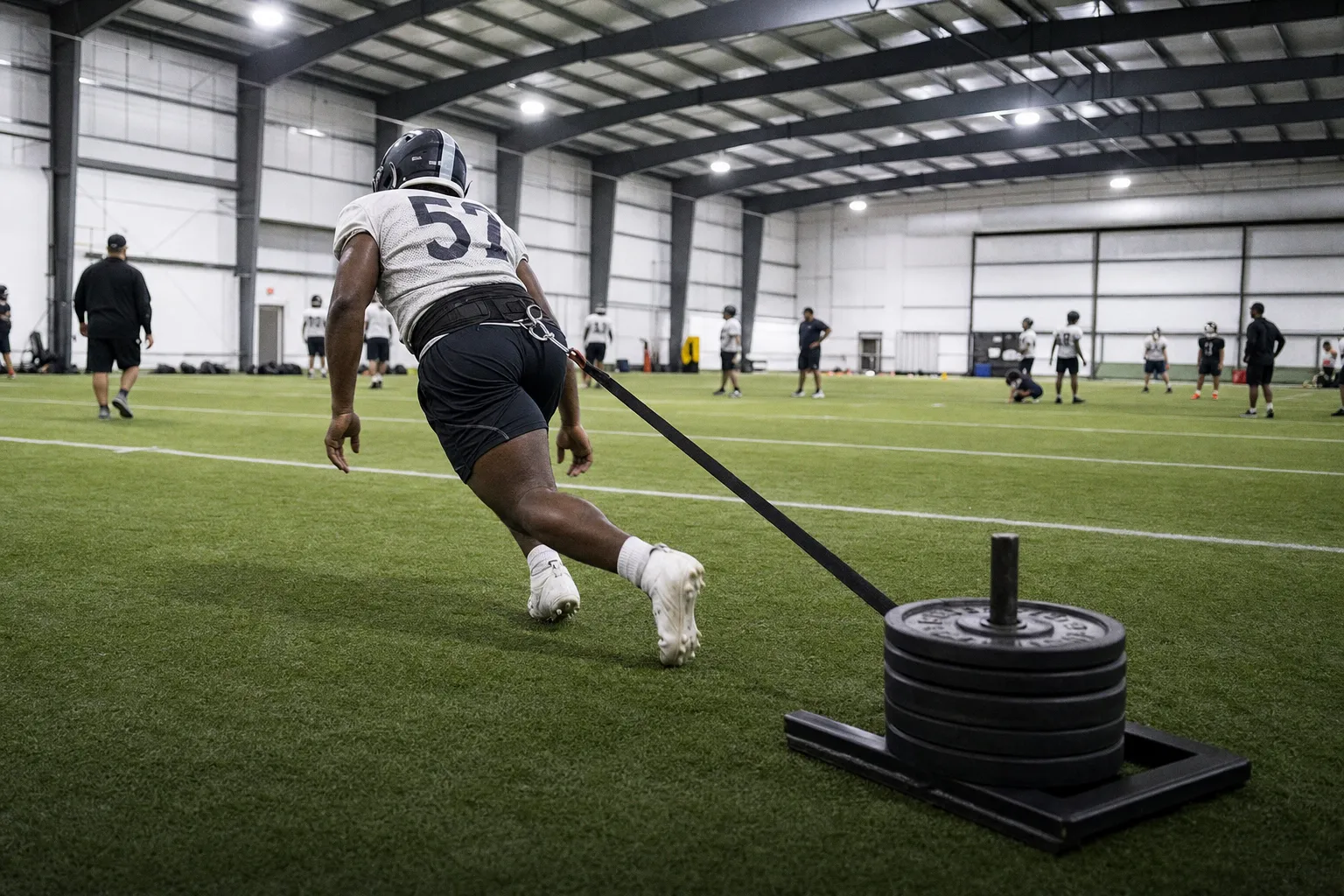
The research target is no longer only the output
The reported direction is clear. Sports science remains interested in competition results, but researchers are also studying long-term health, recovery, injury prevention, mental well-being, sleep, and lifelong physical activity.
That changes the training question.
The old question was narrow: did the athlete get faster, stronger, or more powerful? The better question is mechanical and longitudinal: did the program improve capacity without raising the probability of breakdown?
For an amateur athlete, this matters because the constraint is rarely talent. It is continuity. Missed weeks from tendon pain, poor sleep, excessive soreness, or unmanaged stress reduce total training exposure. The athlete loses the adaptation signal because the system cannot tolerate the load.
The source also notes that researchers are examining why people respond differently to similar exercise programs. Genetics may contribute. So may sleep, nutrition, stress, previous injuries, age, and training history. That is not a minor detail. It argues against a fixed template.
Two athletes can run the same interval session and produce different costs. One gets an aerobic stimulus. Another accumulates calf irritation and poor next-day readiness. Same session. Different response. The program must account for the organism, not just the workout file.
Recovery is becoming a measurement problem
Recovery used to be treated as absence: no session, no stress. The current framing is more precise. Recovery involves the nervous system, muscle tissue, hormones, sleep quality, nutrition, hydration, and mental health.
Sleep is identified as a strong research interest because it supports muscle repair, learning, and cognitive performance. For training design, that means sleep is not lifestyle decoration. It is part of the adaptation pathway.
This has a direct programming consequence. If sleep quality drops, the athlete should not treat the plan as fixed. High-force sessions, high-volume running, and technically demanding work all require readiness. Poor recovery changes kinematics and coordination. It can alter force distribution across joints and tissues.
The useful amateur protocol is simple:
Track sleep, soreness, perceived readiness, and session load. Do it consistently. If two or more recovery markers decline, reduce intensity or volume before symptoms force a longer interruption. Keep the movement pattern if possible. Reduce the cost.
That may mean fewer sprint exposures, fewer heavy sets, shorter intervals, or more rest between efforts. It does not require panic. It requires load adjustment.
More sensors do not equal better coaching
Wearable devices and motion analysis systems are now central to the discussion. The NFL Draft Diamonds piece notes that athletes can monitor heart rate, movement patterns, training load, and sleep with convenience. Researchers can also collect data outside the lab, during real training sessions.
This is useful. It is also easy to misuse.
Video analysis, force plates, motion capture systems, and wearable sensors can help identify movement patterns linked with injury risk or reduced efficiency. But the same source flags the unresolved problems: data accuracy, interpretation, and privacy. More data does not automatically produce better decisions.
That is the key point for the everyday athlete. A heart-rate graph, sleep score, or movement metric is not a diagnosis. It is an input. The interpretation still has to connect to training history, current load, pain, fatigue, and performance trend.
The Times also reports, from its headline, a sports tech brand spending £500k on PhD research. Without further confirmed detail, the safe conclusion is limited: commercial sports technology is seeking closer ties with formal research. That trend should be watched, not swallowed whole.
The practical filter is strict. Before changing training because of a device, ask three questions.
What does the metric measure?
Is it consistent enough to guide decisions?
What action will change if the number moves?
If there is no action, the metric is noise.
For now, the better amateur model is not more complexity. It is tighter feedback. Plan the load. Record the response. Adjust before mechanics degrade. Performance remains the output. Durability determines how often the athlete gets to train for it.