Essential Strength Training Gear for Seniors Over 60
The US Centers for Disease Control and Prevention sets a baseline: two muscle-strengthening sessions per week for adults over 60.
Duncan Reed·updated July 11, 2026
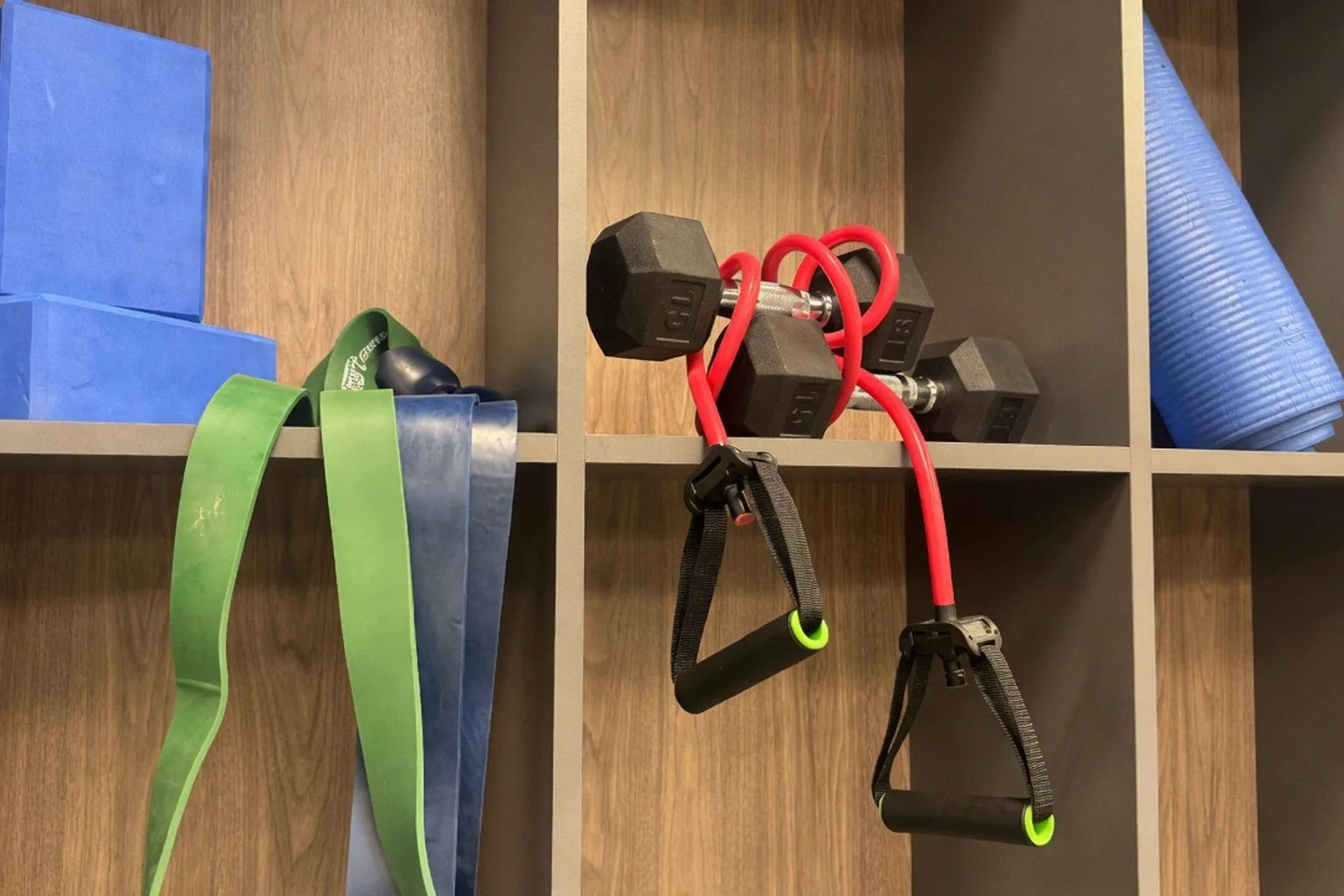
The Tool Hierarchy
Resistance bands deliver variable tension across the range of motion. The five-band set reviewed covers extra-light through extra-heavy resistance. Variable tension loads the muscle through its full length-tension curve, a kinematic feature fixed-weight dumbbells cannot replicate. Start with the lightest band on hip-dominant and pressing patterns. Escalate band density only when the working tissue stops producing meaningful force at end-range.
Weighted vests shift the axial load during gait and bodyweight work. The reviewed vest adjusts from 6 to 8 pounds. Axial loading raises ground reaction forces through the lower kinetic chain — relevant for walking, lunges, and squats. The vest format suits trainees with reduced grip capacity or hand and wrist joint pathology who cannot safely hold external weight.
Adjustable dumbbells handle bilateral and unilateral free-weight loading. Kris Herbert, a strength and longevity specialist, rejects the common misconception: if a trainee can move safely, free weights remain appropriate past 60. Squatting, deadlifting, pressing, rowing, and carrying are the core kinematic patterns. Adjustable systems consolidate that range without consuming a full rack footprint.
The Bone Remodeling Chain
Andrea Marcellus, founder of the AND/life platform, frames the mechanical pathway. Bone is living tissue. When muscle contracts against external resistance, strain transmits through the periosteum. That strain activates osteoblasts, the cells responsible for mineral deposition. Repeated loading produces measurable increases in bone mineral density. This is the force-production-to-bone-remodeling pathway — the reason resistance work displaces endurance-only protocols in aging athletes.
Dr. Nina Blachman, a geriatrician at NYU Langone Health, adds practical support: resistance bands slot into any routine, store easily, and load the joint through a controlled arc. That arc control matters for trainees managing arthritic symptoms or conditions such as carpal tunnel.
A Minimum Protocol
Two sessions per week. Each session covers one hip-dominant loaded pattern, one vertical press or push-up variant, one row or pull, and one loaded carry. Load scales until near-fatigue emerges across the working set. The vest wears during walking on non-lifting days if tolerated.
Progression rule: when all sets complete without technique breakdown, add the smallest available increment. Heavier band, additional vest pound, next dumbbell setting. Reassess every four weeks. If joint discomfort appears, regress the tool before regressing the movement.
That is the mechanical baseline. The remaining variable is execution frequency.