Active recovery methods: how to structure your rest days
A rest day fails when it becomes an unmeasured training day. The common error is mechanical: the athlete removes the main session, then adds enough jogging, stretching, errands, and “easy” circuits to keep tissue stress high. The load changes shape.
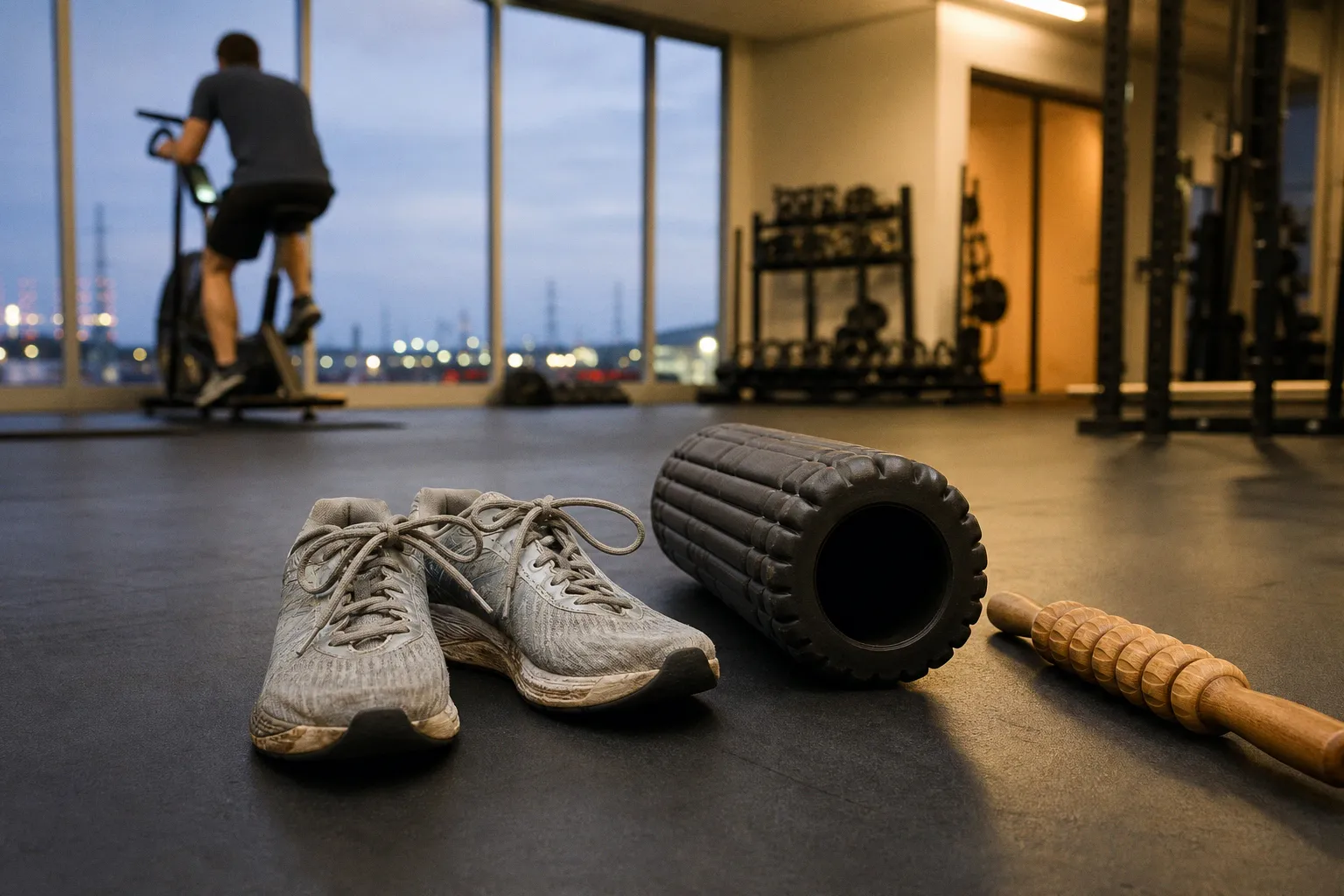
Active recovery solves a narrower problem. It uses low-intensity movement to increase circulation, maintain joint motion, and reduce stiffness without creating a second stimulus. The target is not fitness gain. The target is recovery quality. That distinction controls the whole session: heart rate, movement selection, duration, and exit point.
The physiology of movement-based rest: why blood flow matters
Training creates local disruption. Hard intervals, heavy squats, downhill running, court sports, and repeated accelerations produce muscle damage, connective tissue strain, and metabolic byproducts. Delayed onset muscle soreness usually peaks in the 24–48 hour window after the session. That timing matters. A rest day placed after the hardest work often coincides with the highest tissue sensitivity.
Passive rest removes external load. That can be correct. Injury, fever, acute pain, and clear overreaching need reduced input. But for ordinary post-training stiffness, complete inactivity has a cost. Circulation drops. Joint positions narrow. The athlete returns to training with poor range, poor rhythm, and a higher warm-up requirement.
Active recovery keeps the system moving at low cost. Muscle contraction acts as a pump. It supports venous return and increases local blood flow. This helps clear lactate and other metabolic byproducts. It also changes perception. Stiff tissue often tolerates movement better after 10–20 minutes of low-intensity work.
The mechanism is not magic. It is load management. The athlete applies enough mechanical input to restore motion. Not enough to disturb repair.
Active recovery is not a light workout with better branding. It is a recovery intervention with a load ceiling.
This is where many recreational athletes lose the plot. They treat a recovery day as a personality test. The session expands. The bike ride becomes a climb. The mobility circuit becomes loaded end-range strength work. The swim includes sprints. The athlete then reports that active recovery “does not work.” The method did not fail. The intensity control failed.
A useful recovery session has three mechanical features:
- Low eccentric load. Eccentric contractions create more muscle damage than concentric-dominant or unloaded movement. Walking, cycling, and swimming usually fit better than downhill running or plyometric drills.
- Continuous low output. The work should keep circulation elevated without repeated spikes in force production.
- No performance objective. The session should not test pace, power, range, or pain tolerance.
Those constraints sound restrictive. They are the point.
Defining the intensity zone: the 30–60% rule
The most practical heart rate zone for active recovery sits around 30–60% of maximum heart rate. This is not a precision lab target. It is a control range. It prevents the session from drifting into aerobic training.
For a rough maximum heart rate estimate, many athletes use 220 minus age. It is imperfect, but it gives a working ceiling. A 40-year-old using that estimate has a maximum heart rate near 180 beats per minute. The active recovery range would be roughly 54–108 beats per minute. For trained athletes, the lower end may feel too low during movement, so perceived exertion and breathing should cross-check the number.
A better field test is simpler: nasal breathing should remain possible, speech should be normal, and the athlete should finish feeling less restricted than at the start. If the session requires recovery from the recovery session, it missed the target.
| Control point | Correct active recovery | Too hard |
|---|---|---|
| Heart rate | 30–60% of max | Sustained work above the range |
| Breathing | Calm, controlled, conversational | Broken sentences, mouth breathing forced |
| Muscle sensation | Warmth, reduced stiffness | Burning, heaviness, cramping |
| Next-day effect | Same or improved readiness | Flat legs, persistent soreness |
| Session goal | Circulation and motion | Fitness stimulus or calorie target |
Heart rate also exposes hidden intensity. A mobility flow can become demanding if the positions are held under fatigue. A “walk” can become hill repeats. A light bike session can become threshold work if the athlete chases speed. The cardiovascular signal shows what the intent does not.
The session should stop before compensation appears. In gait, that means no limp, no shortened stride to protect a sore calf, no hip hiking to avoid knee flexion. In cycling, no rocking pelvis and no grinding cadence. In mobility work, no breath holding, no joint pinching, no forced end range.
A recovery day should reduce noise in the system. Compensation adds noise.
Low-impact movement strategies for muscle repair
The best active recovery workout examples look underwhelming on paper. That is another sign they are correct. They use simple patterns, low joint impact, and steady rhythm.
Walking
Walking is the default. It loads the foot, ankle, knee, and hip through a familiar pattern with low eccentric cost. It is useful after lifting, field sports, and running, provided soreness does not alter gait.
Use 20–45 minutes on flat ground. Avoid steep descents after heavy lower-body training. Downhill walking increases eccentric braking in the quadriceps. That is not a recovery stimulus when the quads are already damaged.
The mechanical cue is stride symmetry. If soreness changes foot strike or hip extension, shorten the walk or choose cycling.
Light cycling
Cycling gives circulation with reduced impact. It works well after running intervals, court sessions, and heavy squatting because it limits ground reaction forces. Keep resistance low. Use a cadence that avoids grinding. The goal is repeated motion through the hip and knee, not force production.
A typical structure:
1. 5 minutes very easy spin. No resistance target. Let heart rate rise slowly.
2. 15–25 minutes steady low output. Stay in the 30–60% maximum heart rate range.
3. 5 minutes lower cadence and lower resistance. Exit gradually. Do not finish with a sprint.
The athlete should step off the bike with warmer legs and no sense of depletion.
Swimming or pool movement
Swimming reduces axial load and joint impact. It can help athletes with high lower-limb soreness, especially when walking feels clumsy. The risk is upper-body fatigue. Poor swimmers turn an easy pool session into high effort because technical inefficiency raises cost.
Use easy laps, pool walking, or gentle kicking with rest. Avoid hard intervals. Avoid aggressive kick sets after calf or hip flexor overload.
Mobility circuits
Mobility is useful when it restores usable range. It becomes training when it adds high tension, long end-range holds, or loaded positions. On an active recovery day, the circuit should bias controlled joint motion, not forceful stretching.
A simple 20-minute mobility block can use:
- Cat-camel for spinal segmentation. Low force. Smooth motion. No end-range pushing.
- 90/90 hip switches. Controlled rotation. Hands can support the torso to reduce load.
- Ankle rocks against a wall. Knee tracks over the foot. Heel stays down. No pain at the front of the ankle.
- Thoracic rotations. Rib cage moves without lumbar twisting.
- Deep squat pry only if tolerated. Short holds. No pinching in the hip or knee.
The rule is clear. If a drill requires bracing like a strength set, it is not recovery work.
The growth of digital coaching and simulation tools has made this kind of monitoring easier; broader coverage of the expansion of virtual training and simulation shows why more athletes now encounter guided recovery sessions through screens rather than in-person coaching.
Active recovery vs passive rest
The comparison is not ideological. It depends on tissue state and systemic fatigue.
Passive rest means the athlete removes training stress and adds no structured movement beyond daily life. It is useful when the body has poor tolerance for input. That includes acute injury, illness, severe sleep restriction, unusually high resting heart rate, or clear overtraining signs. In those cases, more movement can be the wrong dose.
Active recovery fits ordinary training fatigue. The athlete is sore but functional. Range is reduced but not painful. Energy is lower but stable. Movement improves symptoms rather than amplifying them.
| Situation | Better choice | Reason |
|---|---|---|
| Mild DOMS after lifting | Active recovery | Blood flow and motion can reduce stiffness without adding high load |
| Sharp joint pain | Passive rest or clinical assessment | Movement may reinforce compensation or irritate tissue |
| Heavy legs after intervals | Light cycling or walking | Low eccentric cost supports circulation |
| Fever or systemic illness | Passive rest | Recovery capacity is already compromised |
| Poor sleep for several nights | Passive rest or very short movement | Systemic recovery is limited |
| Normal soreness before next training block | Active recovery | Maintains range and readiness |
The decision should be based on response. Start with 10 minutes. If movement improves gait, range, and stiffness, continue. If symptoms worsen, stop. This is not caution as sentiment. It is feedback-based load management.
Myofascial release and percussive therapy for DOMS management
Foam rolling has a narrow but useful role. Evidence supports reductions in delayed onset muscle soreness and improvements in joint range of motion, without a clear negative effect on subsequent performance when used appropriately. It does not break scar tissue. It does not “flush toxins.” It modifies tissue tone, pressure tolerance, and short-term mobility.
The effective dose is modest. A 10–15 minute session is enough for most athletes. More pressure does not mean more recovery. Excessive rolling can irritate sensitive tissue and increase guarding.
Use foam rolling before or after low-intensity movement. The order depends on the athlete.
- If the athlete feels stiff and guarded, start with 5–10 minutes of walking or cycling, then roll.
- If a specific area blocks motion, use brief rolling first, then test the movement pattern.
- If soreness is diffuse, use general movement first and save rolling for large muscle groups.
A practical lower-body sequence after a hard running or lifting day:
1. Calves: 60–90 seconds per side. Slow passes. Pause on dense areas without forcing pain.
2. Quadriceps: 60–90 seconds per side. Keep the trunk supported. Do not turn it into a plank.
3. Glutes: 60–90 seconds per side. Small angle changes. Avoid direct pressure on nerve-like symptoms.
4. Adductors: 45–60 seconds per side. Light pressure. This area often reacts poorly to aggressive rolling.
5. Thoracic spine: 60 seconds. Extend gently over the roller. Do not roll the neck.
Percussive therapy, often delivered through massage guns, has similar constraints. It can increase local blood flow and reduce stiffness. The evidence does not establish that it is superior to traditional massage. It is a tool, not a recovery hierarchy.
Use short exposures. Keep the device moving. Avoid bony landmarks, irritated tendons, bruises, acute strains, and areas with numbness or radiating symptoms. The target is reduced tone. Not tissue punishment.
A massage gun should change sensation, not win an argument with the muscle.
Foam rolling and percussive therapy work best when paired with movement. Pressure changes how tissue feels. Movement teaches the system to use the new range. Without movement, the effect often fades quickly.
What to do on active recovery days: three templates
The active recovery day should match the previous stressor. A runner after hill repeats does not need the same session as a lifter after heavy deadlifts. Kinematics differ. Tissue cost differs. The recovery input should differ.
Template 1: After heavy lower-body strength training
Use this after squats, deadlifts, lunges, heavy sled work, or high-volume accessory training.
- Light cycling: 20 minutes at 30–60% maximum heart rate.
- Foam rolling: 10 minutes across calves, quads, glutes, and adductors.
- Mobility: 8–12 minutes of 90/90 switches, ankle rocks, and unloaded hip hinges.
- Exit test: bodyweight squat for 5 slow reps. Stop if depth requires compensation.
Avoid long static stretching of sore muscles. It may feel productive, but high-duration end-range tension can add threat to already sensitive tissue.
Template 2: After speed work or field sport
Repeated accelerations stress hamstrings, calves, adductors, and hip flexors. The recovery day should restore stride mechanics without adding speed.
- Flat walk: 25–35 minutes, normal stride, no hills.
- Calf and foot mobility: 5 minutes of ankle circles, toe extension rocks, and gentle calf raises.
- Adductor rock-backs: 2 sets of 8 per side, low intensity.
- Easy trunk rotation: 2 sets of 8 per side.
No tempo runs. No strides. No “just a few” accelerations. Sprint tissue needs quiet input between high-force exposures.
Template 3: After upper-body strength or throwing volume
Upper-body recovery often gets reduced to shoulder stretching. That misses the system. Throwing and pressing involve thoracic rotation, scapular motion, trunk stiffness, and grip load.
- Easy rower or walk: 15–25 minutes, low heart rate. If rowing irritates the back or elbows, walk.
- Thoracic mobility: open books and quadruped rotations, 2 sets of 8 per side.
- Scapular control: wall slides or serratus punches, 2 sets of 10.
- Soft tissue: light work on lats, pecs, and posterior shoulder for 6–8 minutes total.
Do not dig aggressively into the front of the shoulder. Sensitive anterior shoulder tissue rarely improves from blunt pressure.
Sleep is not optional recovery infrastructure
Active recovery works inside the larger recovery budget. Sleep controls much of that budget. The American College of Sports Medicine recommends 7–9 hours of sleep per night for adults. For athletes, that range supports hormonal regulation, muscle tissue repair, immune function, and motor learning.
A good active recovery session cannot compensate for repeated short sleep. It may reduce stiffness. It will not restore a nervous system that is under-slept. When sleep drops, training tolerance drops. The same session becomes more expensive.
This matters for programming. A recreational athlete often trains around work, family, and stress. The calendar may label Tuesday as a recovery day, but the body reads total load. A night of five hours of sleep changes the input. The correct active recovery session may become 15 minutes of walking and mobility, not 45 minutes of cycling plus rolling.
Use simple markers:
- Resting heart rate above normal. Reduce the session or choose passive rest.
- Soreness plus poor coordination. Use very low-impact movement only.
- Persistent irritability or low drive to train. Treat it as systemic fatigue, not a motivation problem.
- Warm-up takes unusually long. Lower the next training load or extend recovery.
Sleep also affects pain sensitivity. Under-slept athletes often report higher soreness from the same workload. That can lead to unnecessary treatment: more rolling, more stretching, more devices. The better intervention may be earlier sleep and reduced evening stimulation.
Recovery is not a collection of hacks. It is a hierarchy. Sleep sits above foam rollers.
Placing active recovery inside the training week
Active recovery should not be random. It should sit where the training week creates predictable tissue cost.
A common amateur schedule places hard running on Tuesday, strength on Thursday, and a long session on Saturday. The recovery inputs then belong on Wednesday, Friday, and sometimes Sunday. The exact content depends on what was stressed.
Example structure:
| Day | Training load | Recovery input |
|---|---|---|
| Monday | Moderate strength | Short mobility after training |
| Tuesday | Intervals or hard sport session | Normal cooldown, no extra work |
| Wednesday | Active recovery | Walk or bike plus foam rolling |
| Thursday | Heavy strength | Sleep priority, short cooldown |
| Friday | Active recovery | Cycling plus hip and thoracic mobility |
| Saturday | Long run, ride, or match | Gentle cooldown, nutrition, early sleep |
| Sunday | Passive or active rest | Choose based on soreness and gait quality |
The rule is to protect the next quality session. If active recovery improves readiness for that session, it stays. If it creates fatigue, it gets shorter. If passive rest produces better output, use passive rest.
There is no fixed moral value attached to movement. The body responds to dose.
The same logic applies within a single day. After a hard session, a cooldown can act as immediate active recovery. Five to ten minutes of light cycling, walking, or easy swimming can reduce abrupt circulation drop and help downshift the system. It should not extend the workout. The cooldown ends when breathing normalizes and movement quality returns.
A concrete protocol for the next rest day
Use this protocol when soreness is present but pain is not sharp, gait is normal, and there are no illness signs.
1. Check baseline. Note resting soreness, joint range, and walking mechanics. If walking is altered, choose cycling or passive rest.
2. Set the ceiling. Keep heart rate between 30–60% of maximum. Use breathing as a secondary control.
3. Move for 20–30 minutes. Walk, cycle, swim, or combine two low-impact options. No intervals. No hills if the legs are sore.
4. Add 10 minutes of tissue work. Foam roll the main sore regions. Use moderate pressure. Stop before guarding.
5. Run a short mobility circuit. Pick three to five drills that restore range without high tension.
6. Exit with a movement test. Use a squat, hinge, lunge, overhead reach, or easy stride. The pattern should look cleaner than at the start.
7. Cap the session. More is not better once stiffness has dropped.
If the session improves motion and leaves energy unchanged, it was dosed correctly. If it produces fatigue, soreness escalation, or compensation, reduce duration first. Then reduce intensity. Then remove the session if needed.
Active recovery is a mechanical tool. It manages circulation, range, and stiffness between training stressors. It does not replace passive rest, sleep, nutrition, or clinical care when tissue is injured. It works when the athlete respects the ceiling: low intensity, low eccentric load, clear exit criteria.
FAQ
How do I know if my active recovery session is too intense?
Is walking a good form of active recovery?
Should I use foam rolling to break up scar tissue?
How long should an active recovery session last?
Can I use active recovery if I am feeling sick?
By Duncan Reed