Running injury prevention: the mechanics of load tolerance
Practical, evidence-based strategies to optimize your training, accelerate recovery, and unlock your athletic potential.
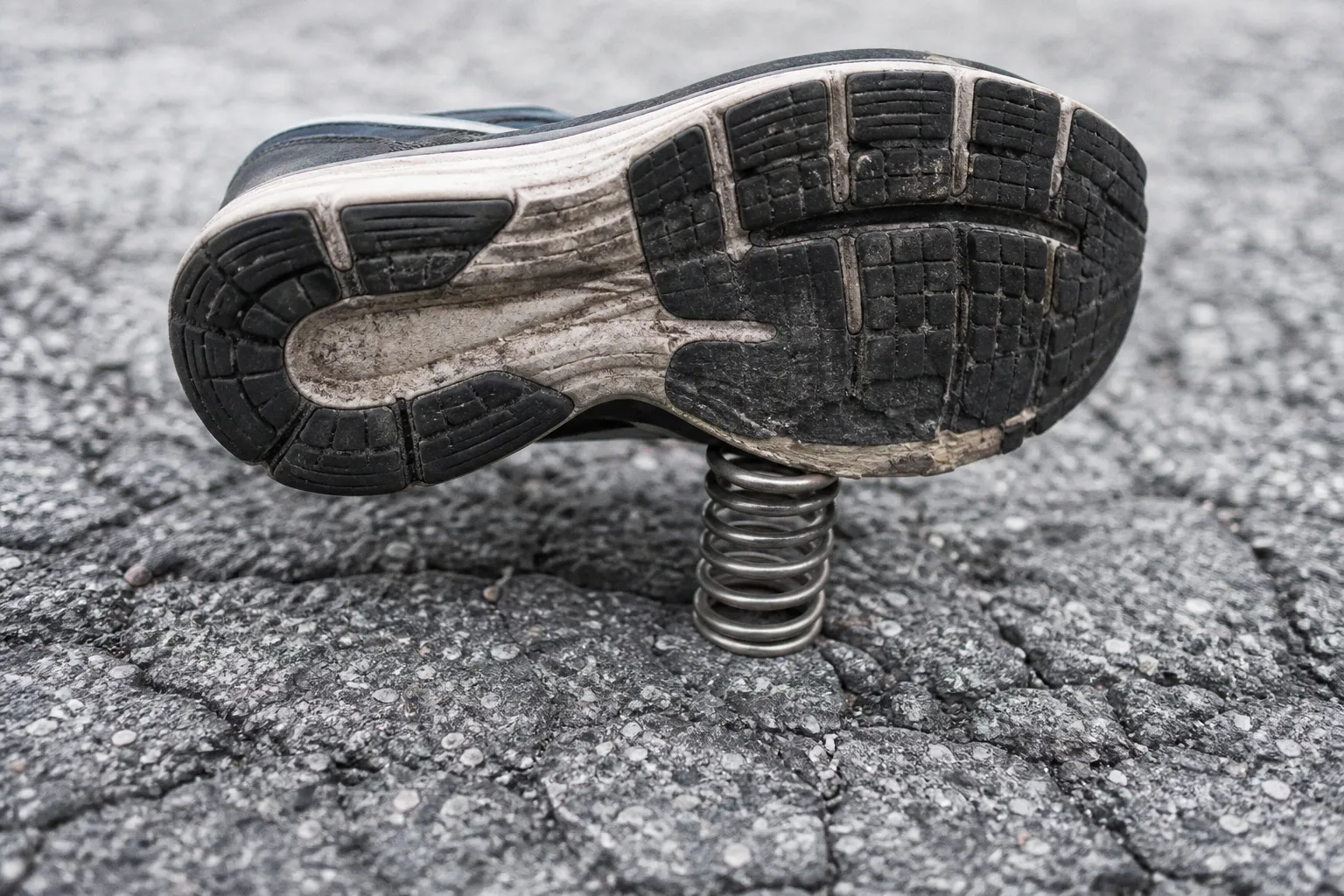
Running Injury Prevention: The Mechanics of Load Tolerance
Most running injuries are not random. They are mechanical failures. Load is applied to tissue — tendon, bone, muscle — and the tissue cannot absorb it. The result is patellofemoral pain, Achilles tendinopathy, medial tibial stress syndrome, iliotibial band syndrome. These diagnoses share one mechanism: applied load exceeded tissue capacity.
The fix is not elimination of load. Rest clears symptoms. Load, applied progressively, increases capacity. That distinction defines running injury prevention. The runner who never raises tolerance will eventually exceed it. The runner who raises it in measured steps does not.
The Science of Load Tolerance and Tissue Adaptation
Load, in running, has three measurable components. Magnitude. Frequency. Duration. A weekly schedule of 40 kilometers at a 5:00/km pace produces a different internal stress profile than 40 kilometers at 4:30/km on rolling terrain. The first factor is ground reaction force at each foot strike. The second is the cumulative number of loading cycles. The third is the duration over which the tissue absorbs these forces without recovery.
Tissue adapts. This is the SAID principle — Specific Adaptation to Imposed Demands. Bone subjected to repetitive impact remodels its cortical and trabecular architecture. Tendon increases collagen cross-linking density under tensile load. Muscle adds sarcomeres and improves neural drive. Adaptation is conditional, not automatic. Three requirements must be met:
1. The stimulus must exceed a minimum effective threshold — typically 60–80% of the tissue's current load-bearing capacity.
2. The stimulus must be progressive — small, regular increases in magnitude or volume.
3. Recovery intervals must allow remodeling before the next stimulus arrives.
Different tissues remodel at different rates. Muscle adapts fastest — measurable hypertrophy in 4–6 weeks. Tendon adaptation is slower, with significant stiffness changes requiring 8–12 weeks of consistent loading. Bone remodeling takes longer, with full cortical response to a new training stimulus emerging over months. This timeline governs how rapidly a runner can safely advance volume.
Tissue capacity expands only when load is applied progressively. Rest treats symptoms. Load builds resilience.
Navigating the Acute:Chronic Workload Ratio (ACWR)
The ACWR is the most operationally useful metric in running load management. It compares acute training load (the past 7 days) to chronic training load (the past 28 days, rolling average). A ratio between 0.8 and 1.3 indicates that current weekly load sits within a band the body has recently experienced and is prepared to absorb. A ratio above 1.5 indicates a spike — a sudden jump in load the body has not had time to adapt to. The data on this is consistent: ratios above 1.5 are associated with substantially elevated injury risk across athletic populations.
| ACWR Zone | Ratio | Interpretation |
|---|---|---|
| Undertrained | < 0.8 | Acute load dropped below chronic baseline; possible detraining or over-recovery |
| Optimal | 0.8–1.3 | Acute load consistent with recent conditioning; lowest injury risk zone |
| Caution | 1.3–1.5 | Acute load rising faster than chronic baseline; requires monitoring |
| High risk | > 1.5 | Acute spike beyond the adaptive window; injury risk elevated |
Operational use is straightforward. The runner logs total weekly mileage — or, better, session-by-session load measured by duration multiplied by rate of perceived exertion. The 7-day total goes on top. The 28-day rolling average multiplied by 7 days goes on the bottom. The division yields the ratio.
Two limitations matter. First, ACWR captures volume well but poorly distinguishes intensity. A 60-kilometer week with ten kilometers of intervals produces a different tissue stress profile than 60 kilometers of continuous easy running. Pair ACWR with separate intensity tracking. Second, ACWR is a population tool. Individual variation exists. Some runners tolerate ratios above 1.5 with no incident. Others break down at 1.3. Use the model as a warning system, not a verdict.
Strength Training as a Buffer Against Overuse Injuries
Heavy resistance training has been shown to reduce overuse injuries by up to 50% in athletic populations. The mechanism is capacity expansion — tendons and muscles become more load-tolerant when subjected to controlled high-tensile stress. Running alone is insufficient stimulus for this adaptation. Running is high-cycle, low-magnitude loading. Tendons respond to high-magnitude, low-cycle loading. Strength training provides the latter.
Three movement patterns matter most:
- Hip abduction and external rotation. Weakness in the gluteus medius produces femoral adduction and internal rotation under load. This kinematic shift increases knee valgus moment and lateral pelvic drop. Both are primary drivers of patellofemoral pain and iliotibial band syndrome. Heavy loaded carries, single-leg Romanian deadlifts, and side-lying hip abduction directly target this deficit.
- Calf complex. The soleus and gastrocnemius absorb the largest share of ground reaction force at toe-off. Both seated (soleus-dominant) and standing (gastrocnemius-dominant) heavy calf raises develop this system. Single-leg variants remove bilateral compensation.
- Eccentric calf work for Achilles health. Three sets of 15 slow eccentric heel drops on a step, performed twice daily for 12 weeks, is the protocol with the deepest evidence base for Achilles tendinopathy. It increases tendon stiffness and reduces pain.
Strength sessions should run twice per week, on non-consecutive days. Loads progress from 60% to 80% of estimated one-rep max over an 8-week cycle. Volume per session: 3–5 sets of 5–8 repetitions for the compound patterns above. Heavy slow resistance — a 3-second eccentric phase — produces greater tendon adaptation than ballistic work.
Biomechanical Adjustments to Reduce Joint Impact
Biomechanics are not destiny. Individual anatomy varies. Universal "correct" running form does not exist. Two variables, however, are reliably modifiable and consistently linked to peak impact forces at the knee and hip: cadence and hip stability.
Cadence. Increasing steps per minute by 5–10% reduces peak impact forces at the knee and hip. The mechanism is reduced braking impulse and shorter stride length. A runner at 165 spm who shifts to 175 spm — a 6% increase — typically experiences a measurable reduction in peak knee adduction moment on treadmill analysis. Running gait retraining takes 4–6 weeks of conscious practice. Use a metronome app or a footpod with cadence display. Do not chase arbitrary targets — 170–180 spm is the band most commonly cited, but individual optimum varies with height, leg length, and pace.
Hip stability. Hip abductor strength correlates inversely with knee valgus during the stance phase. Single-leg strength work, lateral band walks, and step-downs train the system. For runners already presenting with knee valgus collapse or contralateral pelvic drop, gait retraining focused on knee tracking and pelvic level during stance reduces symptoms within 8 weeks.
Foot strike pattern sits lower on the modification hierarchy. Heel striking is not inherently injurious on its own. What matters is whether the foot lands under the body's center of mass, or ahead of it. Overstriding — the foot landing well in front of the hip — increases braking force regardless of foot strike pattern. Stride length should shorten before foot strike pattern changes.
Biomechanical fixes are not corrections of errors. They are redistribution of load across structures better equipped to absorb it.
Individualizing the 10% Mileage Progression Rule
The guideline: increase weekly mileage by no more than 10% per week. This figure originates from bone stress injury research and has been broadly adopted in preventing running overuse injuries.
It is a guideline, not a physiological law. Individual tolerance depends on training history, current fitness, and recovery capacity. A novice runner with a six-month base can typically tolerate 10% weekly increases for 4–6 weeks before tissue symptoms emerge. An experienced runner with a multi-year base often tolerates larger increments, particularly in low-intensity volume, because their chronic adaptation window is wider. Conversely, a return from injury requires 5% or smaller weekly increments even with prior experience, and a runner returning from a hard race block may need to drop back further before rebuilding.
A practical framework for applying the rule:
- Build phases (3–4 weeks): 10% weekly increase in volume. Hold intensity constant. Strength sessions continue twice weekly.
- Recovery weeks (every 3rd or 4th week): 20–30% reduction in volume. Maintain one quality session to preserve intensity tolerance.
- Intensity changes: Treat intensity increases (intervals, hill work, tempo) like volume increases. Do not couple a 10% volume increase with new intensity in the same week.
- Symptom check: If persistent dull pain during or after running lasts more than 24 hours, reduce volume by 30% for one week before resuming progression.
These parameters interact. A runner advancing volume by 10% weekly without strength training, at low cadence, on hilly terrain, accumulates tissue stress faster than the same volume on flat terrain with full strength work in place. The 10% rule is a single input to a multi-variable system, not a stand-alone safety mechanism.
A Concrete Load-Management Protocol
| Day | Activity | Purpose |
|---|---|---|
| Mon | Easy run + strength (hip, calves) | Tissue stimulus, low cumulative load |
| Tue | Interval session or tempo | Intensity stimulus |
| Wed | Easy run or cross-train | Volume continuation without intensity |
| Thu | Strength (full session) | Capacity expansion |
| Fri | Rest | Tissue remodeling window |
| Sat | Long run | High-volume sustained load |
| Sun | Recovery run or rest | Active recovery |
Monitor ACWR weekly. Calculate the 7-day versus 28-day ratio. Stay in the 0.8–1.3 band during build phases. Allow the ratio to dip during recovery weeks — this is engineered drop-off, not loss of fitness. Strength work twice per week. Cadence on interval days at target range. A recovery week every third or fourth week, with one intensity session preserved.
Running injury prevention is a load management problem. Expand tissue capacity through progressive overload. Avoid unannounced load spikes through ACWR monitoring. Address the kinematic variables that distribute force across better-equipped structures. The protocol is mechanical because the failure mode is mechanical. Rest treats symptoms. Load builds resilience.
FAQ
What is the ACWR and how do I use it to prevent injury?
Why is strength training important for runners?
How much should I increase my weekly mileage?
Can changing my running form prevent injuries?
How long does it take for different tissues to adapt to training?
By Duncan Reed