Hot or Cold for Muscle Recovery? Could This New Study Change Everything You Thought You Knew?
A newly circulated study headline is putting thermal recovery under fresh scrutiny. Per reporting from fitguru.training, new data may upend conventional thinking on heat versus cold application for post-exercise muscle recovery.
Duncan Reed·updated July 13, 2026
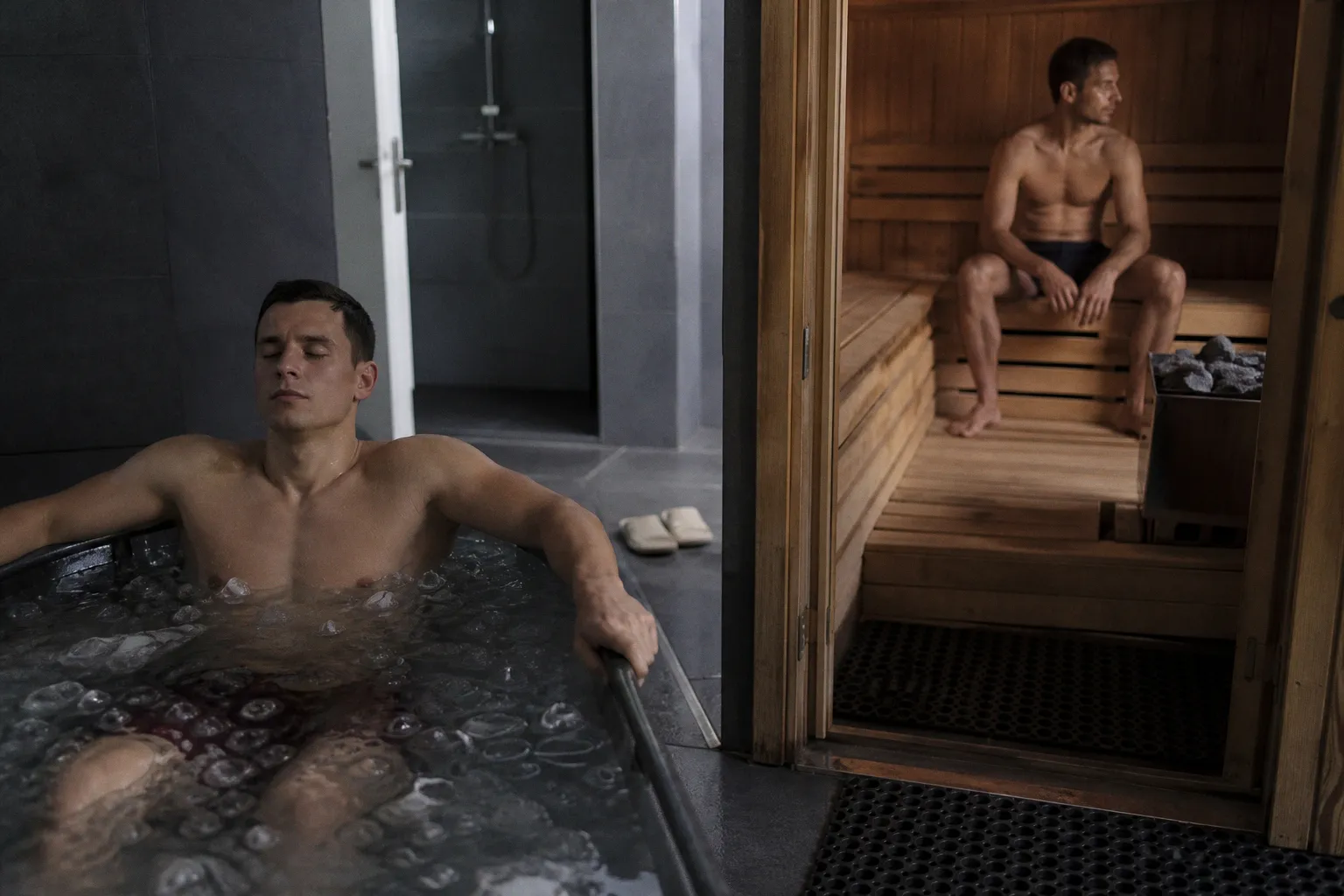
For athletes managing weekly training loads, the question cuts to the bone. Cold water immersion and contrast bathing have been standard tools in recovery protocols for decades, predicated on specific physiological claims: reduced inflammation, attenuated muscle soreness, accelerated clearance of metabolic byproducts. If the underlying mechanism is being recontextualized, every recreational athlete currently timing their ice baths needs to revisit the rationale, not just the routine.
The thermal recovery question
The framing of the fitguru.training piece suggests a direct comparison between modalities, not an incremental adjustment. That structure implies a head-to-head trial or a meta-analytic approach rather than a single-cohort observation. Until the full dataset emerges, the practical takeaway is constrained: treat existing heat and cold protocols as conditional, not load-bearing. Do not adjust programming on a headline alone.
Olfactory priming: confirmed output data
A separate, fully documented study from the University of Malaya, published in Frontiers in Physiology, offers concrete numbers on a different recovery-adjacent variable. Dr. Mohamed Nashrudin bin Naharudin's team tested 23 healthy, moderately trained men in their early to mid-twenties after a 10-hour fast. Participants performed leg extensions to failure under three conditions: 90 percent cocoa dark chocolate scent, 60 percent cocoa milk chocolate scent, and a neutral water control.
The dark chocolate condition produced 18 additional repetitions on average versus control. Hunger ratings and desire to eat dropped in parallel. Perceived exertion did not rise to match the added volume. The proposed mechanism: olfactory cues trigger anticipatory satiety signals in the central nervous system, freeing perceived capacity for force production.
This is not a recovery finding. It is a pre-training output finding with downstream recovery implications. Greater training volume at matched perceived exertion shifts the recovery demand curve upward. Athletes planning to experiment should adjust subsequent load calculations accordingly.
Protocol adjustments
Three concrete steps for the recreational athlete monitoring this space:
Hold current thermal protocols steady until methodology surfaces. The headline does not constitute a recommendation change. Log every cold plunge, hot bath, or contrast session alongside next-day soreness scores and session-readiness ratings for the next training block. Baseline data enables direct comparison once the full study lands.
If attempting olfactory priming with dark chocolate scent, cap experimental sessions at one per week initially. Track rep counts and perceived exertion separately to isolate the variable from confounding factors like sleep, caffeine, and time of day.
The broader pattern matters beyond the gym. Multiple interacting inputs — temperature, scent, timing, fasting state — each modulate output and recovery through distinct physiological channels. Athletes who treat recovery as a single-variable problem will underperform those who treat it as a system. The same logic governs performance tuning across multiple interacting factors in any optimization context. Variable isolation beats variable stacking.