Choose Between Isotonic and Hypotonic Drinks for Summer Runs
The summer hydration aisle is built on a useful trick: make every bottle look like the missing piece between you and a personal best.
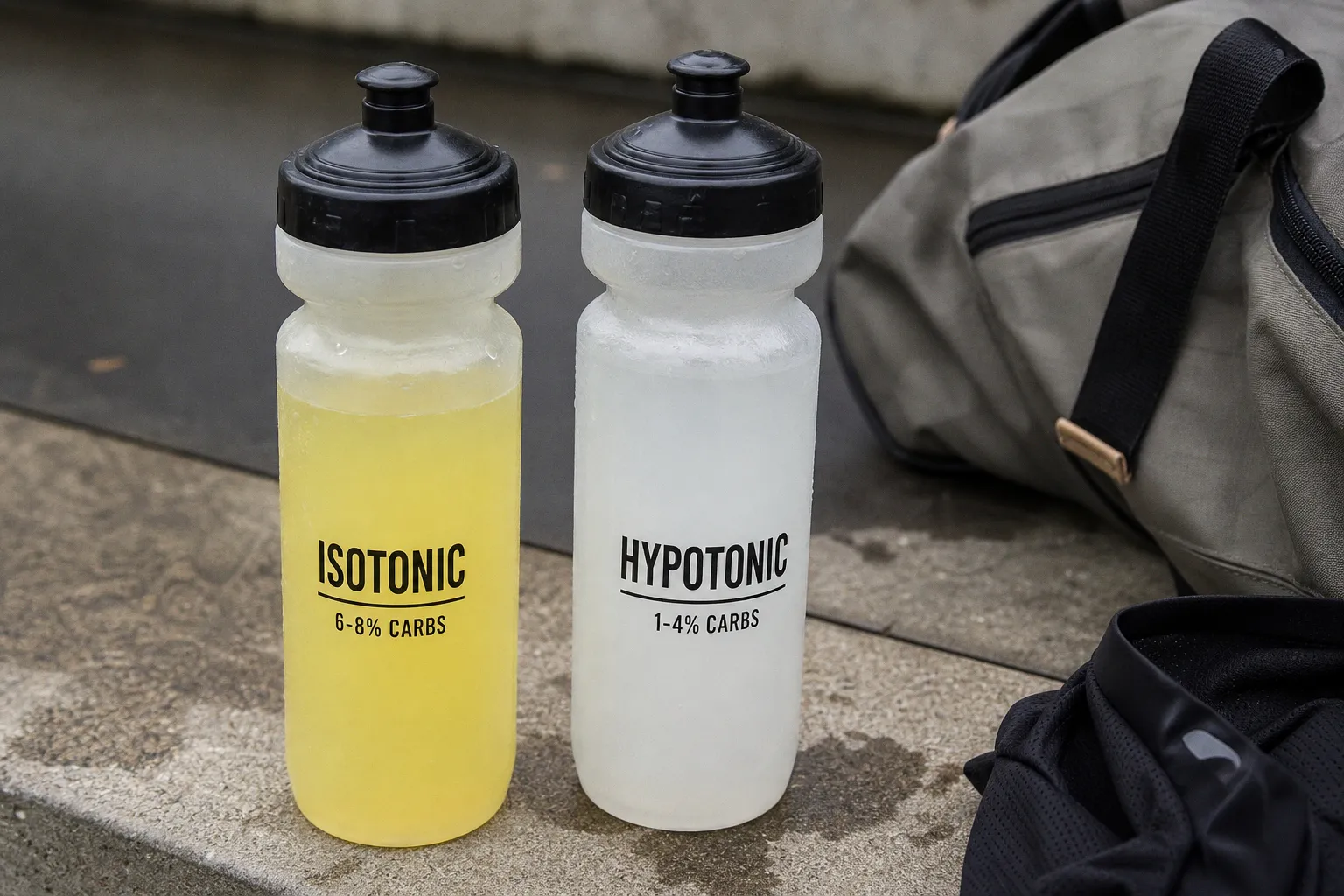
If you are trying to figure out how to choose between isotonic and hypotonic drinks for summer runs, start with one dull but decisive question: do you mostly need fluid absorbed quickly, or do you also need carbohydrate fuel while you run? That question does more work than most label claims. In heat, the wrong drink is rarely catastrophic, but it can be irritatingly effective at making you feel heavy, thirsty, under-fueled, or convinced you have a “cramping problem” when you really have a matching problem.
The boring physics that decides whether your drink helps or just sits there
Sports drinks are usually sorted by osmolality: how concentrated the fluid is compared with your blood. That sounds like the point where a supplement brand starts drawing arrows in a white paper and loses everyone. We do not need that. You need the practical version.
For related context, see EV reviews and buyer guides: EV models, charging and range, buying guides, home and.
For related context, see Sports stars and athletes — football, NBA, UFC and tennis: bios, careers and facts.
An isotonic drink is designed to sit roughly in the same concentration range as blood, around 270–330 mOsm/kg. In real bottle terms, that often means about 6–8% carbohydrate, or 6–8 grams of carbohydrate per 100 ml. It gives you fluid plus a meaningful carbohydrate supply. It is the “hydrate and fuel” option.
A hypotonic drink is less concentrated than blood. It usually contains about 1–4% carbohydrate. Because it is lighter on solutes, it tends to empty from the stomach and absorb faster. It is the “get fluid in quickly, do not burden the gut with much fuel” option.
Neither is morally superior. Neither is the enlightened choice. This is not a purity contest. It is plumbing and energy supply.
| Parameter | Hypotonic drink | Isotonic drink |
|---|---|---|
| Typical carbohydrate concentration | 1–4% | 6–8% |
| Main job | Rapid fluid replacement | Fluid plus carbohydrate fuel |
| Best fit | Shorter runs, easy sessions, hot conditions where thirst is the main issue | Hard or long runs, especially over 60 minutes |
| Gut feel for many runners | Lighter | More substantial; can feel heavy if overused |
| Energy contribution | Low | Moderate and useful during longer efforts |
| Common mistake | Expecting it to fuel a long hard run | Using it for every sweaty jog like it is mandatory equipment |
This is the baseline. Not the glossy claim, not the influencer routine, not the “my coach once said” rule. Concentration changes how a drink behaves. Once you understand that, the choice gets less mystical.
A sports drink is not a personality type. It is water, carbohydrate, sodium, and concentration.
When hypotonic makes sense: hot, short, and not in need of a sugar parade
Hypotonic drinks are useful when the run is mostly a hydration problem. Think easy summer mileage, short tempo work with good pre-run fueling, or a session where heat stress is high but total duration is not long enough to justify much carbohydrate during the run.
If you are heading out for 35–50 minutes in humid weather, you probably do not need a 6–8% carbohydrate drink sloshing around unless you skipped breakfast, started depleted, or are stacking the session after another hard workout. Your limiting factor is more likely fluid availability and comfort than exogenous carbohydrate oxidation. Yes, I used oxidation. No, we do not need to pretend the bottle is performing magic.
Hypotonic drinks are also helpful when your gut gets dramatic in the heat. Summer running already slows digestion for some athletes because blood flow is being pulled toward working muscle and skin for cooling. Add a more concentrated drink, push the pace, and suddenly your stomach files a complaint. A lighter drink can be a cleaner fit.
This is where amateur runners often overcorrect. They see sweat, they think calories. But sweat is not a direct carbohydrate invoice. Sweat tells you that you are losing fluid and electrolytes. It does not automatically tell you to drink a bottle that could double as a light syrup.
Use hypotonic when:
1. The run is under about an hour and not brutally intense. You may need fluid more than fuel, especially if you ate normally beforehand.
2. Heat is the main stressor. On hot days, rapid absorption can matter more than squeezing in extra grams of carbohydrate.
3. You are prone to gut heaviness. A 1–4% carbohydrate drink is often easier to tolerate than a standard isotonic mix.
4. You are drinking alongside separate fuel. If you are using gels, chews, or food, a hypotonic drink may keep the total concentration in your gut more manageable.
5. You need to encourage drinking without overdoing sweetness. A little carbohydrate and sodium can improve palatability without turning the bottle into dessert.
That last point matters. Some runners drink more consistently when the fluid tastes like something. Plain water can be fine, but “fine” is not the same as consumed in sufficient volume. Sufficiency is the job. Not austerity.
When isotonic earns its keep: the run is long enough to need fuel
Isotonic drinks make sense when you need both hydration and carbohydrate during the session. The simplest cutoff: once a run goes beyond 60 minutes, especially if it is high intensity, you should start thinking seriously about fuel. Not because your body collapses at minute 61. Because longer duration raises the cost of under-fueling, and carbohydrate availability starts to matter more.
A typical isotonic drink sits around 6–8% carbohydrate. That concentration is useful because it supplies energy without being as concentrated as many juices, sodas, or badly mixed homemade concoctions. It is not a full meal in a bottle, and it is not trying to be. It is a controlled delivery system.
For summer long runs, marathon-pace work, extended trail sessions, or workouts where the back half matters, isotonic can be the practical option. You drink because you need fluid, and you get carbohydrate at the same time. Elegant enough, provided you do not turn it into theater.
The mistake I see is using isotonic drinks as a blanket hydration strategy. A 30-minute recovery jog does not become more professional because your bottle contains a 6–8% carbohydrate solution. It becomes a 30-minute recovery jog with extra sugar you may or may not need. That is not a scandal. It is just not targeted.
For long sessions, isotonic drinks can help with:
- Maintaining carbohydrate availability. During harder running, carbohydrate is a major fuel. Supplying some during the run can protect pace and reduce late-session fade.
- Reducing the need to carry separate fuel. One bottle can cover part of the energy plan, which is useful for runners who hate juggling gels.
- Making hydration more deliberate. Flavor, sodium, and carbohydrate often make athletes drink more reliably than they do with plain water.
- Supporting repeated training days. Under-fueling long summer sessions can bleed into the next day. Recovery does not start after the run if you spent the last hour digging the hole deeper.
There is a catch, because of course there is. If you pair an isotonic drink with gels, chews, and a heroic handful of gummy candy, your gut may not experience this as “optimized fueling.” It may experience it as an administrative burden. Total carbohydrate concentration matters. If the drink is already doing fuel work, count it.
Sodium: not glamorous, still doing the unglamorous job
Sodium in sports drinks is not there because salt is trendy. It helps stimulate thirst and supports fluid retention. In hot conditions, that matters. A useful target range for many sports drinks is roughly 0.5–0.7 grams of sodium per liter.
This does not mean every runner needs to chase the saltiest option available. Sweat sodium losses vary widely. Sweat rate varies too. Some athletes finish looking like a salted pretzel; others do not. But a drink with no sodium is often less useful during longer hot runs than one with a moderate amount, especially if you are drinking enough that dilution becomes relevant.
Here is the part people like to ruin: sodium does not make a poor hydration plan brilliant. If you begin a summer long run already behind on fluids, your sports drink has to clean up a mess it did not create. If you drink nothing for 75 minutes and then blame the sodium content of your bottle, I will be professionally polite and privately unimpressed.
Sodium is especially relevant when:
1. The run is long enough for sweat losses to accumulate. A short easy run may not require much replacement. A long hot run changes the math.
2. You are a heavy sweater. High fluid loss increases the need to think beyond plain water.
3. You are drinking large volumes. Sodium helps fluid retention; plain water alone may not be the best tool when intake is high.
4. You finish with salt marks on clothing. Not a lab test, but a useful clue that you may be losing more sodium than the runner next to you.
5. You struggle with persistent thirst after runs. That can signal poor fluid retention, though it can also mean you simply did not drink enough.
Cramping is messier than the internet wants it to be. Heat, fatigue, pacing, conditioning, muscle load, fluid loss, and electrolytes can all be involved. Anyone selling a single-cause cramp story is usually selling the solution too. Convenient.
Sodium helps you hold onto fluid. It does not grant immunity from bad pacing, poor fitness, or starting the run dehydrated.
The practical match: duration, intensity, heat, and what you ate before
The best way to choose is not by brand category. It is by matching the drink to the session. Summer changes the priority because heat increases sweat loss and raises the cost of poor fluid planning. But intensity and duration still decide whether fuel matters.
A simple decision model works better than most complicated hydration calculators for everyday athletes.
Under 45 minutes, easy to moderate
Most runners can handle this with water or a hypotonic drink, assuming they start normally hydrated. If it is very hot, a hypotonic drink may encourage better drinking and absorb quickly without much gut load. Isotonic is usually unnecessary unless the run is part of a bigger training day or you are under-fueled going in.
This is also where lifestyle noise enters. You do not need a performance beverage for every movement of your body through space. If you like the taste, fine. But liking it and needing it are different categories, much like reading practical life advice and calling it a training plan would be a category error.
45–75 minutes, easy or steady
This is the gray zone. In cool weather, many runners still manage well with water. In summer, hypotonic can be useful because fluid replacement becomes more important. If the run includes steady work, hills, or you have not eaten much, isotonic starts to become more defensible.
Ask yourself what failed on similar runs: thirst, energy, stomach, or pacing discipline. The answer points toward the bottle.
- If you faded despite comfortable breathing, fuel may have been low.
- If your stomach felt full and bouncy, concentration or volume may have been too high.
- If your mouth was dry and your heart rate drifted upward in the heat, fluid intake may have been too low.
- If you ran the first half like a caffeinated greyhound, the drink is not the main suspect.
More than 75 minutes, especially with quality work
Now isotonic has a clearer role. You need a plan for carbohydrate and fluid. An isotonic drink can provide both, although it may not provide all the carbohydrate you need for very long runs. It is still a strong baseline because the 6–8% range is designed for practical absorption and fueling.
If the heat is severe and you need to drink more fluid than your carbohydrate target allows, you can combine approaches: use a hypotonic electrolyte drink for part of your fluid and get fuel from gels or other sources. Or use isotonic in one bottle and water or hypotonic in another. This is not overengineering if the run is long, hot, and specific. It is just matching inputs to demands.
High-intensity sessions in the heat
Intensity pushes carbohydrate use up. Heat pushes fluid needs up. That combination is where many amateur runners get stuck: a hypotonic drink may hydrate well but not fuel enough; isotonic may fuel better but feel heavy if consumed aggressively.
For intervals or threshold work lasting around an hour, the best strategy often starts before the run. Eat enough carbohydrate in the pre-run meal. Arrive hydrated. Then use a drink that supports the session without asking your gut to process a banquet at 5K effort.
In practice:
| Session type | Better default | Why |
|---|---|---|
| 30-minute easy run in heat | Water or hypotonic | Fluid support without unnecessary carbohydrate load |
| 50-minute steady run after normal meal | Hypotonic | Hydration is likely the main need |
| 60-minute tempo in summer | Isotonic or hypotonic plus pre-run carbs | Intensity raises carbohydrate demand |
| 90-minute long run | Isotonic | Fluid and carbohydrate both matter |
| 2-hour hot run with high sweat rate | Mixed strategy | You may need more fluid than isotonic alone comfortably provides |
| Race simulation | Practice intended race drink | Gut training is part of performance, not an optional hobby |
How to read the label without becoming a label detective
You do not need to memorize every formulation. You need to identify carbohydrate concentration and sodium. That is enough to avoid most mistakes.
Carbohydrate concentration is simple arithmetic. If a drink has 6 grams of carbohydrate per 100 ml, it is a 6% drink. If a 500 ml bottle contains 30 grams of carbohydrate, same thing: 6%. That sits in isotonic territory. If a 500 ml bottle has 10 grams of carbohydrate, that is 2%, which is more hypotonic territory.
Sodium is often listed per serving, which is mildly annoying because serving sizes are a marketing playground. Convert it to per liter if you can. A useful sports drink sodium range is about 0.5–0.7 g/L. Labels may list sodium in milligrams, so that is 500–700 mg/L.
A few traps:
- “Electrolyte” does not mean adequate sodium. Some drinks sprinkle in tiny amounts and let the word do the selling.
- “Low sugar” may be good or bad depending on the session. Low carbohydrate is useful for rapid hydration, less useful if you needed fuel.
- Powder scoops are not sacred. Mix too weak and your isotonic drink becomes closer to hypotonic. Mix too strong and you may create a gut problem.
- Taste changes intake. If the drink is technically perfect but you hate it, your actual hydration plan is imaginary.
- Caffeine is a separate decision. Do not confuse stimulation with hydration. The industry enjoys that confusion a little too much.
This is also why homemade drinks can work, but only if you measure with some respect for reality. “A bit of sugar, a pinch of salt, and vibes” is not a formulation. It may be fine for an easy run. It is not the same as knowing concentration.
Your sweat rate matters, but do not turn it into a religion
Individual sweat rate can change the plan. A small runner cruising in dry heat may need a different strategy than a larger runner doing marathon-pace work in humid air. Fitness, acclimation, clothing, pace, and weather all change sweat losses.
A simple sweat check is useful: weigh yourself before and after a representative run, account for fluid consumed, and estimate how much you lost. You do not need to do this every day like a hydration accountant. Do it enough to learn whether you are a light, moderate, or heavy sweater in summer conditions.
But sweat rate does not automatically choose isotonic or hypotonic for you. It tells you about fluid needs. The drink choice still depends on whether you also need carbohydrate.
For example:
- Heavy sweater, 40-minute easy run: hypotonic may be ideal.
- Heavy sweater, 100-minute long run: isotonic may help, but you may also need extra fluid from water or hypotonic drink.
- Light sweater, 90-minute progression run: isotonic may matter more for carbohydrate than fluid.
- Sensitive stomach, hot race: practice a lower concentration strategy with separate fuel instead of discovering gut democracy at mile 9.
Hydration is not a fixed identity. You are not “an isotonic person.” You are a runner doing a specific session in specific conditions.
What I would actually do before a summer run
Here is the blunt version I use with athletes who do not need another lecture, just a decision that works.
For an easy run under an hour, I would start hydrated and use water or a hypotonic drink if it is hot enough to justify carrying fluid. If breakfast or lunch was normal, I would not chase carbohydrate during the run. I would save the isotonic drink for sessions where it has a job.
For a hard session around an hour, I would make sure the pre-run meal contains carbohydrate. Then I would choose based on gut tolerance and heat. If the workout is intense and the weather is punishing, I might use isotonic in small, regular amounts. If the stomach tends to rebel, hypotonic during the run and carbohydrate before may work better.
For long runs over 75–90 minutes, I would usually bring isotonic or combine fluids and fuel deliberately. If it is very hot, I would avoid relying on a single concentrated drink to solve every problem. More fluid may be needed, and forcing all of it through a carbohydrate-containing drink can overshoot what the gut wants.
For race prep, I would practice the exact approach during training. Not because the gut is fragile porcelain, but because race day is a poor time to learn that your chosen drink turns your stomach into a washing machine.
That is the minimalist hierarchy:
1. Start hydrated. A bottle cannot fully compensate for beginning the run behind.
2. Match carbohydrate to duration and intensity. Under an hour is usually not the same as two hours.
3. Use sodium intelligently in heat. Around 0.5–0.7 g/L is a sensible reference range.
4. Keep concentration in mind. Hypotonic for faster fluid emphasis; isotonic for fluid plus fuel.
5. Practice before it matters. Your gut deserves a rehearsal, even if your ego does not.
The bottom line: stop asking which drink is best
The better question is: best for what run?
Hypotonic drinks are the cleaner match when summer running is mainly a fluid problem: shorter duration, high heat, lower fueling demand, sensitive stomach. Isotonic drinks are the better tool when the run is long or hard enough that carbohydrate delivery matters alongside hydration. The dividing line is not sacred, but once you move beyond about 60 minutes of high-intensity exercise, isotonic starts to earn its space.
The marketing wants you to believe hydration is a product category. It is not. It is a series of boring physiological requirements: fluid absorption, sodium sufficiency, carbohydrate availability, and gut tolerance. Get those mostly right and you can stop treating every warm run like a laboratory crisis.
Choose the drink that matches the session. Drink enough to support the work. Eat enough before the run. Do not expect a bottle to rescue bad planning. That is not glamorous, which is usually how you know it is close to useful.
FAQ
How do I know if I should use a hypotonic or isotonic drink?
Why does my stomach feel heavy when I drink sports drinks?
Do I need to add sodium to my sports drink?
Can I use an isotonic drink for a short, easy run?
How can I calculate the carbohydrate percentage of my drink?
By Nelson Gould