Can Battle Rope Intervals Boost Performance for Wheelchair Athletes?
According to LifeScience.net, a six-week battle-rope sprint-interval program improved endurance performance in wheelchair basketball athletes in a study published in the Journal of Strength and Conditioning Research.
Duncan Reed·updated July 23, 2026
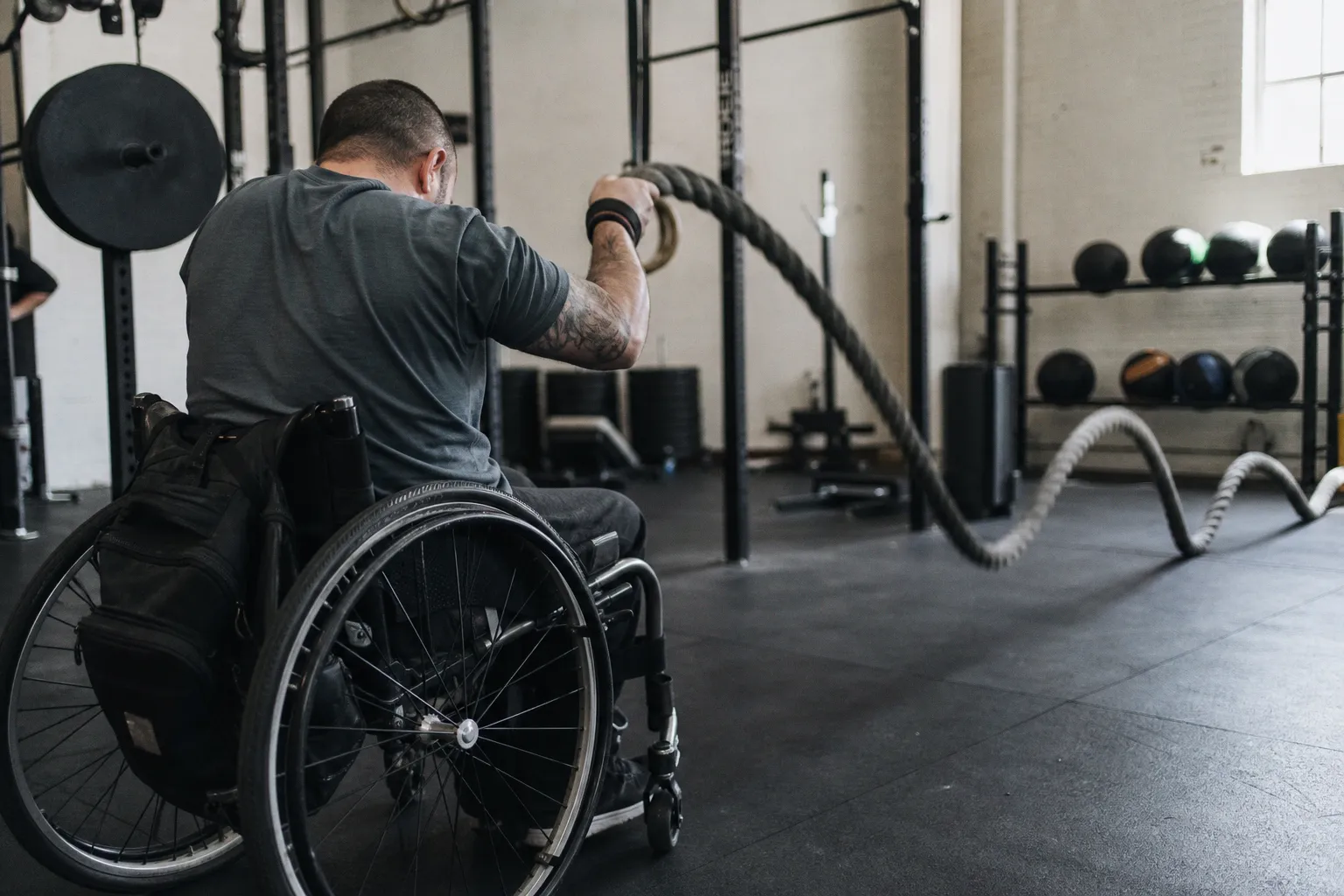
The signal is useful because battle ropes load repeated upper-body force production without requiring expensive equipment. But the available report does not provide the session structure, participant characteristics, or the size of the effect.
Endurance changed. The reported mechanism did not.
The reported outcome is endurance performance. That is the firm boundary of the news.
The study title also refers to force parameters, but the available summary does not state which force measures changed, by how much, or how they were tested. It therefore cannot support claims about maximal strength, propulsion mechanics, sprint speed, shoulder health, or basketball-specific transfer.
This distinction matters in wheelchair sport. A rope interval is an upper-body cyclical task. It can impose repeated loading through the hands, elbows, shoulders, trunk, and chair position. That does not make it a substitute for court propulsion, technical chair work, or structured strength training. Kinematics and force direction differ.
Still, the modality has a practical advantage: it is described as low-cost and accessible. For teams or athletes with limited access to specialised conditioning equipment, that reduces one barrier to adding high-intensity upper-body work.
Do not turn a six-week result into a universal prescription
The report supports one narrow conclusion: battle-rope sprint intervals may be a useful conditioning tool for wheelchair basketball athletes.
It does not establish a universal rope protocol. No work-to-rest ratio is available. No rope length or resistance is reported. No weekly frequency is reported. No information is given on the athletes’ existing training load, injury status, or competitive schedule. Those omissions matter more than the headline.
A recreational athlete should not copy an assumed “sprint” format from this result. High-repetition rope work can increase local shoulder and forearm demand quickly. If it is added on top of court sessions, pushing volume, resistance work, and daily chair use, the relevant variable is total load management—not whether the rope interval feels sufficiently hard.
The first practical use is therefore classification. Treat ropes as an optional conditioning exposure, not as a test of toughness and not as a replacement for sport practice.
A conservative way to test the tool
Keep the first exposure mechanically simple. Use stable chair positioning, a repeatable rope pattern, and submaximal intervals. Stop the set when hand control, trunk position, or stroke consistency changes. Do not extend the interval merely because the cardiovascular system could continue after force production has become inconsistent.
Track three variables across sessions:
- the number of repeatable work bouts;
- the quality of rope control and chair stability;
- the response of the shoulders, elbows, and wrists before the next training session.
If those markers deteriorate, reduce rope volume before adding intensity. If they remain stable, the ropes can occupy a small, planned place within conditioning work. The current evidence supports that cautious use. It does not justify claims that battle ropes alone improve every performance variable relevant to wheelchair basketball.