ACSM Strength Training Guidelines 2026: What Changed
The American College of Sports Medicine has updated its resistance training guidelines for the first time since 2009, condensing 137 systematic reviews — covering more than 30,000 participants — into…
Duncan Reed·updated July 13, 2026
The American College of Sports Medicine has updated its resistance training guidelines for the first time since 2009, condensing 137 systematic reviews — covering more than 30,000 participants — into a public-health prescription for healthy adults (Currier et al. 2026). The document ratifies heavy loads and moderate volume, retires training-to-failure as a requirement, and elevates power work to a first-class variable. For recreational lifters, the update works less as a revolution than a confirmation: most of what produces results is also what the evidence supports. Fewer than 20 to 30 percent of adults reach the recommended strengthening volume, which is the underlying problem the guideline targets.
Volume, load, and the failure question
The ACSM separates strength and hypertrophy recommendations cleanly. Maximal strength tracks with loads at roughly 70 to 80 percent of a one-rep max, at least twice per week, through a full range of motion, with priority lifts placed early in the session. Hypertrophy has a higher weekly volume floor — approximately ten sets per muscle group — with diminishing returns beyond that threshold. Beginners and deconditioned trainees make progress on substantially less.
The most actionable finding for time-limited athletes: the strength benefit beyond two to three working sets per exercise is modest. Ten weekly sets per muscle group sits as a hypertrophy ceiling, not a universal minimum. General health and functional strength do not require competitive-bodybuilder volume.
The document retires training-to-failure as mandatory. Failure, tempo manipulation, and complex set structures are not supported as requirements by the data. Standard protocols performed consistently outperform novel variations at matched effort. For a trainee managing recovery pressure or a constrained schedule, that removes the rituals that delivered soreness without proportional output.
Power, the variable that fades first
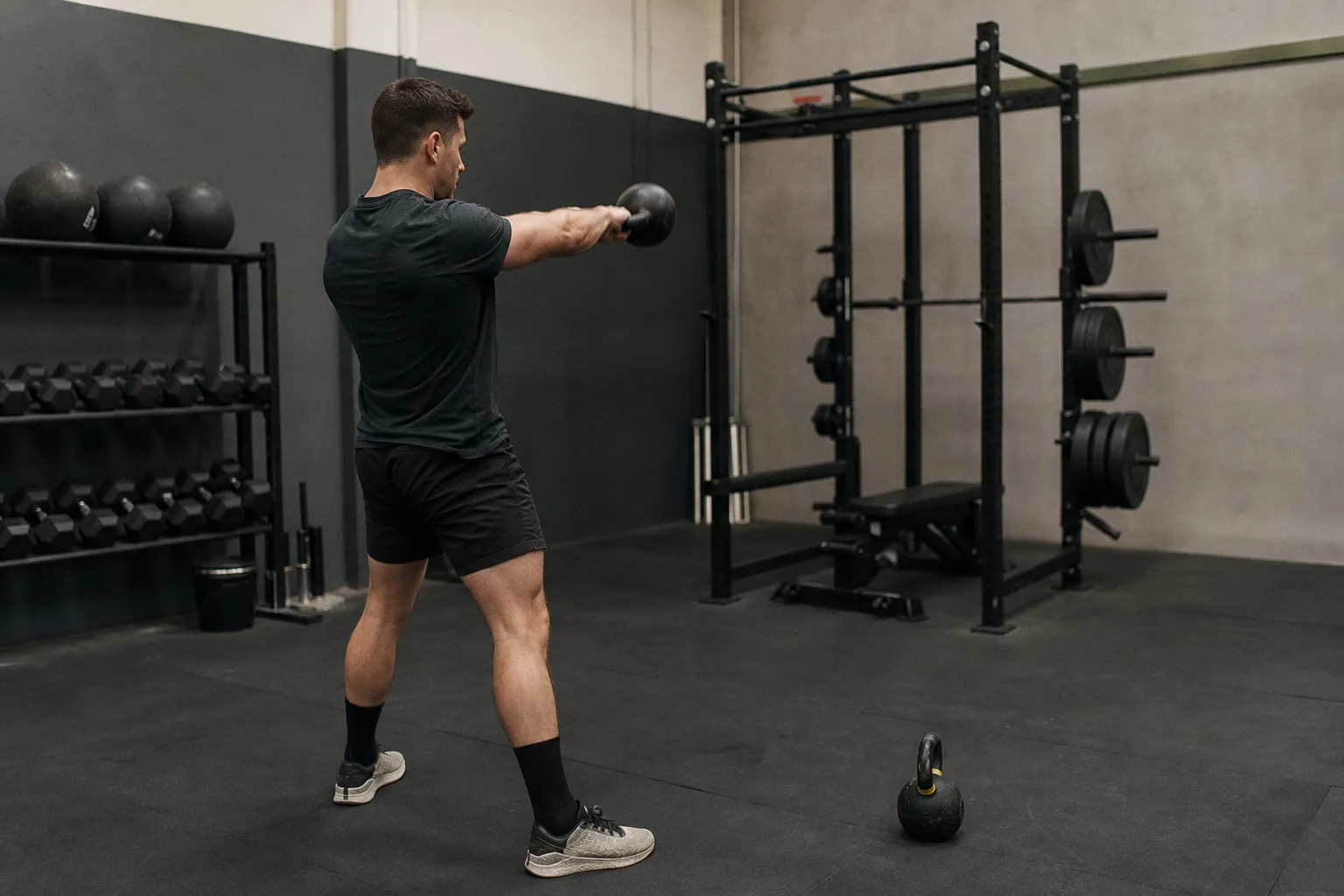
The quiet headline in the update is age-related decline. Power fades earlier than maximal strength with age, yet programming routinely targets absolute load and ignores rate of force development. The ACSM frames dedicated power training — sub-maximal loads moved with high concentric intent, supplemented with ballistic work such as jumps, throws, and medicine-ball variations — as a non-optional component for adults maintaining function past midlife.
Practically, allocate session time to explosive intent on at least one compound lift against light-to-moderate load with maximal concentric bar velocity. Any trainee whose programming has historically excluded ballistic elements carries the same deficit: capacity to produce force rapidly decays on a different timeline than maximal force.
Scope and equipment
The document's title states the target: healthy average adults. Performance-focused athletes are excluded in so many words — they require sport-specific periodization the guideline does not attempt to cover. Recreational competitors should treat the volume and load figures as a baseline, not a ceiling or a template.
The update closes one long-running equipment debate. Machine-based and free-weight training produce comparable strength, hypertrophy, and functional outcomes at matched effort. The deciding variable is adherence and safe execution through a full range of motion. Choose the equipment you control consistently. The document stops at the floor of what works — and that restraint is the point.