How Evening Blue Light Exposure Affects HRV Recovery for Amateur Athletes
According to Sleep Health Journal, amateur athletes who used blue-light-blocking technology after evening training showed 15% faster overnight heart-rate-variability recovery.
Duncan Reed·updated July 18, 2026
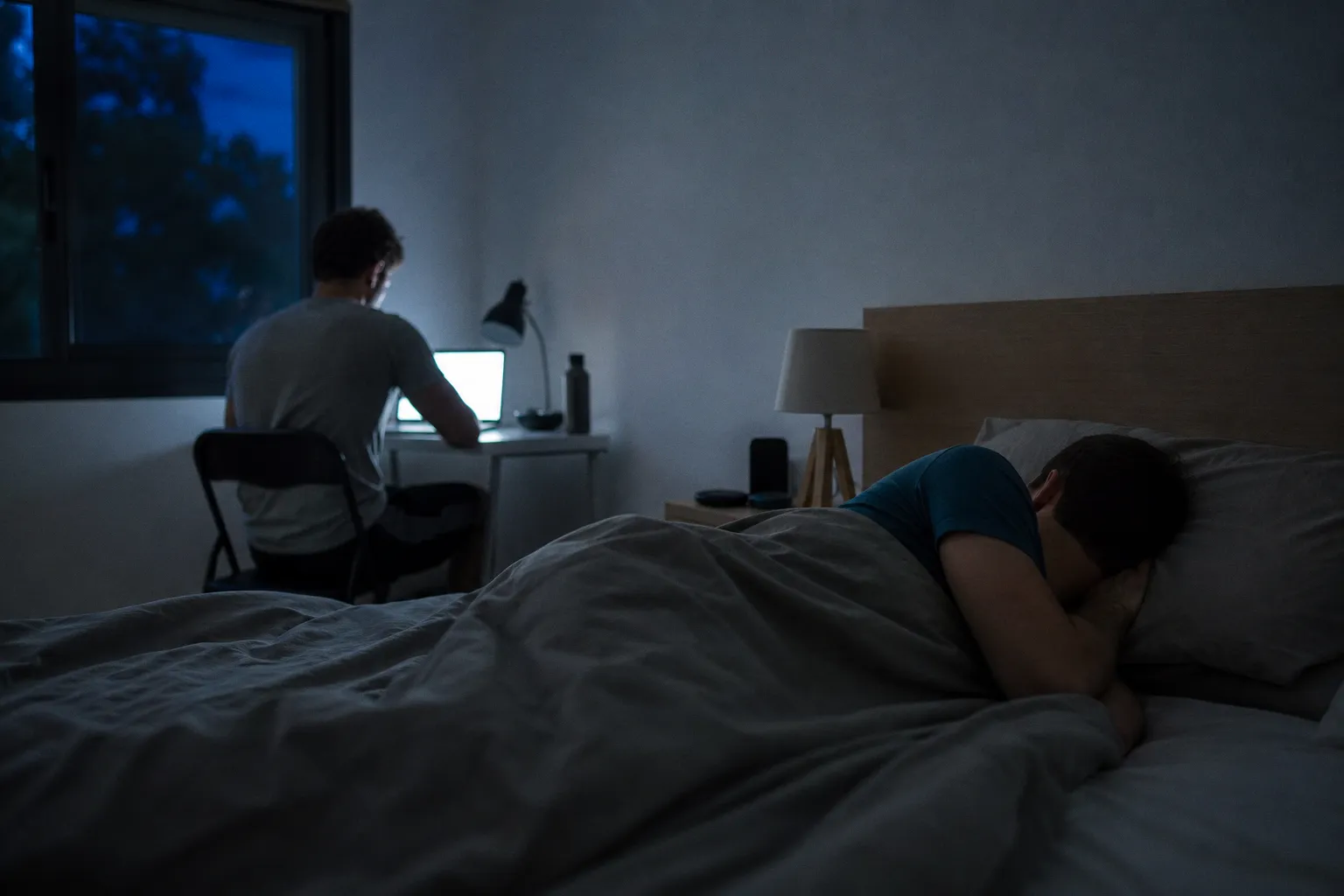
The reported outcome is specific: post-session light management coincided with a change in one recovery metric. It does not establish a general muscle-recovery effect, and the available report provides no melatonin measurements.
The relevant load occurs after the session
Evening training ends mechanical loading. It does not end the recovery window.
For athletes who lift, run, or practice late, the period between the final set and sleep is part of load management. The new report places blue-light exposure inside that period. The intervention was not a change in volume, intensity, exercise selection, or nutrition. It was blue-light-blocking technology used after training.
That distinction matters. A recovery metric can shift without changing the workout itself. The practical variable is therefore simple: what happens between the end of an evening session and overnight recovery.
The reported 15% difference concerns HRV recovery overnight. It should not be converted into claims about faster hypertrophy, reduced soreness, improved performance, or injury prevention. Those outcomes are not provided in the available evidence.
Melatonin remains an unmeasured link
The headline connects evening blue light, melatonin, and muscle recovery. The source excerpt confirms only the HRV finding.
There are no reported participant numbers, training types, duration of the intervention, baseline sleep data, or details on the specific blue-light-blocking technology. There is also no stated measure of muscle damage, strength restoration, or next-day training output.
This limits interpretation. The finding is useful as a signal that post-workout environment may be a controllable part of the recovery routine. It is not a prescription to replace established training variables with an accessory or screen filter.
For a recreational athlete, the hierarchy remains clear. Session design determines force production and tissue loading. The period after training may modify how that load is managed overnight. The current report addresses the second layer, not the first.
A controlled way to test it
Use a fixed protocol after late sessions. Apply blue-light-blocking technology consistently from the end of training through the pre-sleep period. Do not simultaneously change training volume, caffeine use, food intake, or bedtime if the goal is to isolate the variable.
Track the same HRV measure each morning, under the same measurement conditions. Record the time training ended and whether the post-workout light protocol was followed. Compare several evening-training sessions with the protocol against sessions without it.
The target is not a single high reading. The target is a repeatable overnight recovery pattern. If the data do not shift, remove the intervention rather than building a recovery plan around it.