Take Your Fitness Further With Power Training Tips
Power training introduces velocity to traditional load-based work. Two recent reports—from AARP and TODAY.com—outline the same mechanical principle: move a known load at maximum speed during the concentric phase.
Duncan Reed·updated July 15, 2026
Force-Velocity Relationship in Practice
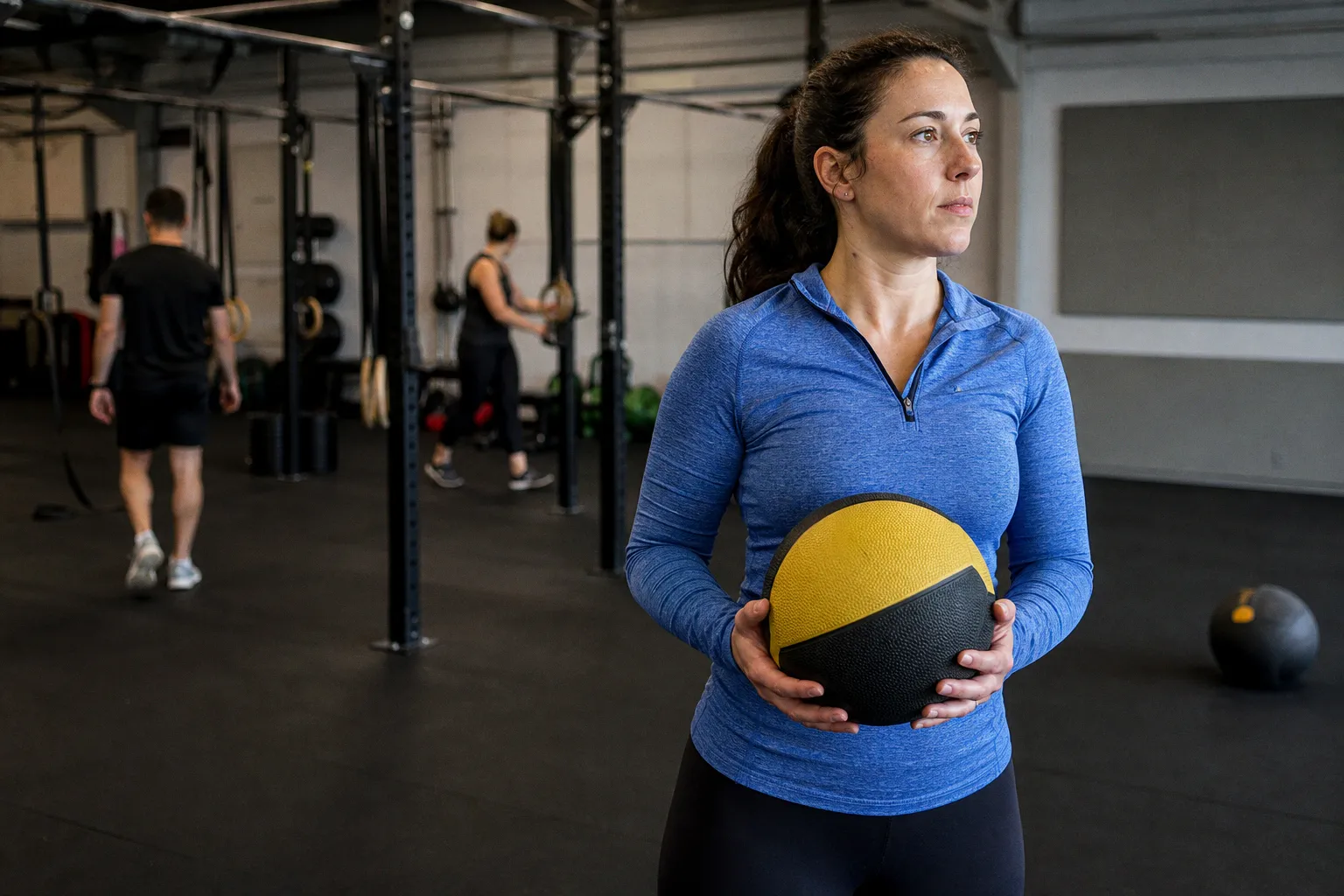
Strength training and power training target different ends of the force-velocity curve. Standard resistance work emphasizes peak force under heavy load. Power training reduces external load but demands maximal acceleration through the concentric range. A medicine ball toss or a fast goblet squat with a light kettlebell qualifies. The objective is not metabolic stress or hypertrophy—it is neuromuscular recruitment at speed.
Dr. Joseph Herrera, chair of rehabilitation and human performance at Mount Sinai, frames the broader programming context with a simple acronym: P-O-W-E-R. Protein supports tissue repair and muscle protein synthesis. Overload follows a progressive model—if a set of ten permits an immediate second set of ten, the load is insufficient. Workout frequency ranges from twice weekly for maintenance to four sessions per week for hypertrophy stimulus. Energy comes from a balanced macronutrient intake. Recovery includes low-intensity aerobic work on off days alongside protein and carbohydrate intake to support adaptation.
Fast-Twitch Preservation and Aging
Fast-twitch motor units (Type II fibers) degrade faster with age than their slow-twitch counterparts. These fibers govern rapid force production—catching a fall, changing direction, reacting to an external perturbation. Power training, by demanding speed under load, selectively stresses these units. The AARP report emphasizes this as a functional priority: preserving fast-twitch capacity reduces fall risk and maintains independence in daily tasks.
The mechanism is straightforward. Neural drive to Type II units declines with disuse. High-velocity contractions restore recruitment patterns. This does not require heavy loading. A bodyweight squat performed with an explosive concentric phase—or a low-resistance band pull at maximum speed—provides the stimulus. The load must be submaximal enough to permit genuine acceleration; grinding through a heavy rep misses the target adaptation.
Timeline and Programming Benchmarks
Neuromuscular adaptation precedes structural change. Herrera notes the first four to six weeks of any new protocol produce primarily neural gains—improved motor unit synchronization, rate coding, and intermuscular coordination. Visible tissue remodeling begins around weeks six to twelve. Measurable hypertrophy and strength shifts consolidate across the three-to-six-month window.
For the recreational athlete integrating power work, the protocol is direct. Select two to three compound movements already in rotation. Reduce load to 30–50% of working max. Execute the concentric phase at maximum intent. Maintain controlled eccentrics. Perform three to five sets of three to five reps—quality and velocity degrade sharply beyond that range. Schedule power sessions at least 48 hours from heavy strength days to manage neuromuscular fatigue. Track bar speed or time-to-completion as the primary metric, not load on the bar. If speed drops more than ten percent across a set, terminate it.